
TL;DR
Uber and Wayve have launched the UK’s first robotaxi service in London, marking a significant milestone in autonomous vehicle deployment. Waymo’s entry is anticipated but has not yet occurred. The development signifies progress in UK autonomous mobility efforts.
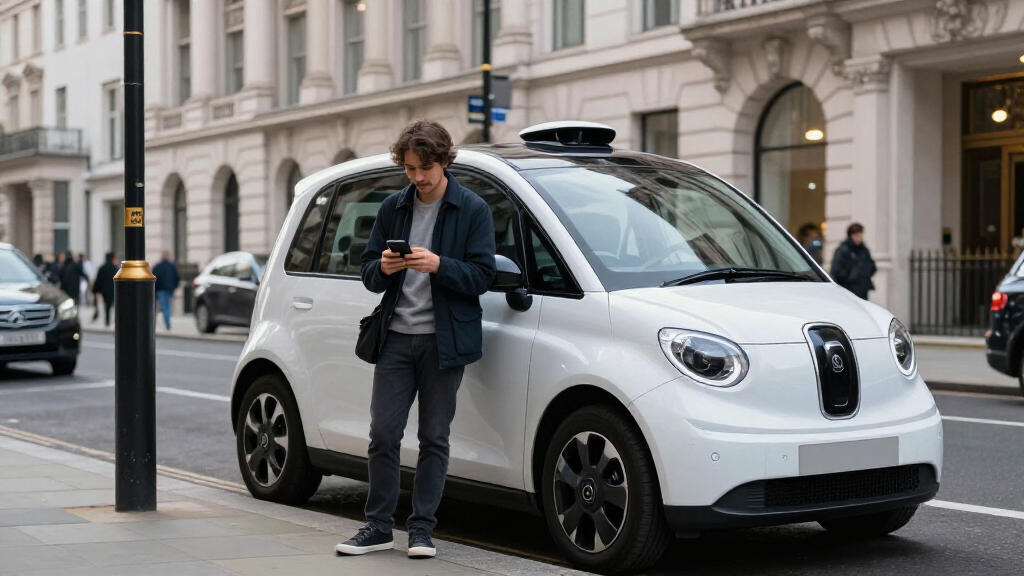
Uber and Wayve have launched the UK’s first robotaxi service in London, marking a major milestone in autonomous vehicle deployment in the country. The service, which began operating in central London this week, is the first to be officially announced and deployed by these companies in the UK, beating Waymo’s anticipated entry into the market. This development is significant as it signals the start of commercial autonomous mobility in one of Europe’s largest cities, with potential implications for transportation, regulation, and industry competition.
The robotaxi service involves autonomous vehicles operated by Uber in partnership with Wayve, a UK-based autonomous vehicle technology firm. According to sources familiar with the deployment, the service is currently limited to select routes within central London, with plans to expand coverage in the coming months. While Uber confirmed the launch, specific details about the fleet size, operational hours, and passenger access remain limited, as official communications are still forthcoming.
Wayve, which specializes in AI-driven autonomous driving systems, has played a key role in the technology behind the service. The deployment marks a significant step for Wayve, which has been testing autonomous vehicles in the UK for several years but has not previously launched a commercial service in London. The company states that its autonomous system is designed to operate safely in complex urban environments, and the service is currently operating with safety drivers onboard, with plans to move toward fully driverless operation in the future.
Implications of the UK’s First Robotaxi Launch
This milestone matters because it demonstrates the progress of autonomous vehicle technology toward commercial viability within a major European city. The launch by Uber and Wayve could accelerate regulatory discussions and public acceptance of robotaxis, potentially transforming urban mobility in London and beyond. It also positions the UK as a competitive player in the autonomous vehicle industry, attracting investment and innovation.
However, the full impact depends on how quickly the service can scale and whether regulators will permit fully driverless operation. The deployment also raises questions about safety, insurance, and infrastructure adaptation, which are still being addressed by authorities and companies involved.
As an affiliate, we earn on qualifying purchases.
UK Autonomous Vehicle Efforts and Market Competition
Autonomous vehicle development has been progressing globally, with companies like Waymo, Tesla, and others conducting extensive testing in the US, China, and Europe. The UK has been a notable hub for AV testing, with several pilot programs underway in cities like London, Milton Keynes, and others. Despite this, commercial deployment has been slow, primarily due to regulatory hurdles and safety concerns.
Waymo announced plans to expand into European markets but had not yet launched in the UK at the time of this report. Uber, which has operated ride-hailing services in London for years, has been exploring autonomous technology as part of its broader mobility strategy. The recent launch indicates a shift toward commercial use, with a focus on urban environments where demand for flexible transportation options is high.
As an affiliate, we earn on qualifying purchases.
Unconfirmed Details About Service Scale and Future Plans
It is not yet clear how extensive the current deployment is — whether it covers only select routes or broader areas — nor how quickly the service will expand. Details about passenger capacity, pricing, and the timeline for full driverless operation remain undisclosed. Additionally, the regulatory response and public acceptance are still evolving, with no definitive statements from authorities on future approvals or restrictions.
As an affiliate, we earn on qualifying purchases.
Next Steps for Autonomous Mobility in London
In the coming months, further details are expected regarding the service’s expansion, safety protocols, and regulatory approvals. Both Uber and Wayve are likely to seek permits for driverless operation, which could be a pivotal moment for autonomous mobility in the UK. Monitoring how authorities respond and how the public adopts the service will be crucial to understanding the long-term impact.
autonomous vehicle fleet management
As an affiliate, we earn on qualifying purchases.
As an affiliate, we earn on qualifying purchases.
Key Questions
How many vehicles are currently part of the robotaxi service?
Specific fleet size has not been publicly disclosed; the service is currently limited to select routes within central London.
When will the service be available outside central London?
Details about expansion plans are still emerging; officials and companies have not announced a timeline for broader coverage.
Will the vehicles operate fully driverless soon?
It is not yet confirmed when full driverless operation will begin; the current deployment involves safety drivers onboard as a precaution.
What safety measures are in place for passengers?
Safety drivers are present during current operations, and the vehicles are equipped with advanced AI systems designed to operate safely in urban environments. Regulatory approvals are ongoing.
How does this compare to Waymo’s plans in the UK?
Waymo has announced intentions to expand into Europe but has not yet launched a service in the UK. The current deployment by Uber and Wayve is the first of its kind in the country.
Source: rss