
TL;DR

Get business pricing on garage and car supplies
- Business-only prices and quantity discounts
- Tax-exempt purchasing
- Multiple users, one account, clear invoices
The Chevy Sprint Turbo, a rare 1980s hot hatch with a turbocharged engine, is gaining renewed interest. This article explores its history, performance, and why it matters today.
The Chevy Sprint Turbo is emerging as a notable but largely overlooked performance car from the 1980s, with recent sightings and documentation bringing renewed attention to this rare model. This development matters because it highlights a forgotten chapter in American and Japanese auto history, appealing to collectors and enthusiasts seeking unique, underappreciated vehicles.
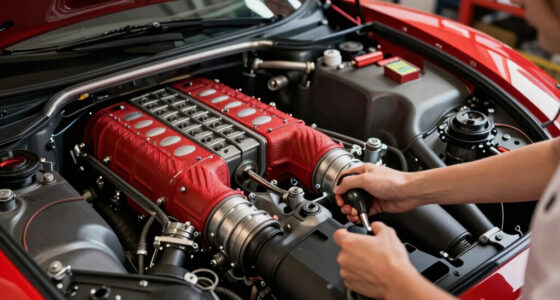
The Chevy Sprint Turbo, produced between 1985 and 1989, was a compact hatchback equipped with a turbocharged 1.0-liter engine, delivering approximately 70 horsepower. Originally marketed as an affordable, sporty option, it was based on the Japanese Suzuki Alto but rebranded for the North American market under Chevrolet. Its lightweight design and turbocharged engine gave it a surprising performance edge for its class, making it a true ‘hot hatch’ ahead of its time.
Recent collector sightings and online documentation have brought the Sprint Turbo back into focus. Though never widely recognized or marketed as a performance vehicle, it has gained a small but dedicated following among enthusiasts interested in 1980s performance cars. The rarity of surviving models and the lack of widespread documentation have kept it largely under the radar, until now.
Automotive historians note that the Sprint Turbo was part of a broader trend of small, turbocharged cars from Japan making their way into North America. However, unlike more famous models such as the Honda Civic Si or the Volkswagen GTI, the Sprint Turbo remains a niche curiosity, with only a few examples confirmed to exist today. Its modest power output and limited production run contribute to its scarcity and collectability.
Why the Chevy Sprint Turbo Matters in 1980s Car History
The Chevy Sprint Turbo represents an early example of the ‘hot hatch’ concept in North America, predating many more famous models by several years. Its turbocharged engine and lightweight chassis demonstrated the potential of small cars to deliver sporty performance, influencing future development in the segment.
Moreover, the Sprint Turbo’s rarity and obscure status make it a valuable collector’s item, offering insight into the automotive marketing strategies of the 1980s and the crossover of Japanese small car technology into American markets. Its rediscovery underscores the importance of niche models in automotive history and the growing interest in vintage performance cars among collectors today.
As an affiliate, we earn on qualifying purchases.
The 1980s Small Car Performance Boom and the Sprint Turbo’s Place
During the 1980s, automakers worldwide experimented with turbocharged engines to meet stricter emissions standards while maintaining performance. Japanese manufacturers, in particular, developed small, turbocharged cars that offered spirited driving at an affordable price. Models like the Honda Civic Si, Volkswagen GTI, and Mazda 323 Turbo gained popularity, shaping the modern hot hatch segment.
The Chevy Sprint Turbo was part of this wave, produced exclusively for the North American market by rebadging a Japanese Suzuki Alto. It was offered as a budget-friendly, sporty alternative, but its limited marketing and low production numbers meant it did not achieve widespread recognition. Over time, most of these vehicles were scrapped or lost to history, leaving only a handful of surviving examples.
Recent interest in 1980s cars and the rise of online automotive communities have led to a reevaluation of models like the Sprint Turbo. Enthusiasts now see it as an underappreciated piece of performance car history, with potential for restoration and collection.
As an affiliate, we earn on qualifying purchases.
Remaining Questions About the Sprint Turbo’s Rarity and Condition
It is not yet clear how many Chevy Sprint Turbo models still exist or their current condition. Most surviving examples are believed to be in private collections or abandoned, and comprehensive records of production numbers are unavailable. The extent of their performance capabilities today, given their age and potential modifications, remains uncertain.
As an affiliate, we earn on qualifying purchases.
Potential for Restoration and Increased Collector Interest
Automotive enthusiasts and collectors are beginning to seek out the Chevy Sprint Turbo, with some already undertaking restoration projects. As online communities and vintage car shows grow more interested in 1980s performance models, it is likely that more examples will be discovered or restored, increasing their visibility and value.
Automakers or collectors may also explore the possibility of reproducing parts or documenting the model’s history further, contributing to its recognition as a significant yet underappreciated piece of automotive history.
Chevy Sprint Turbo collector parts
As an affiliate, we earn on qualifying purchases.
As an affiliate, we earn on qualifying purchases.
Key Questions
How many Chevy Sprint Turbo models were produced?
Exact production numbers are unknown, but it is believed that only a limited number of units were built between 1985 and 1989, making it a rare collector’s item today.
What engine did the Chevy Sprint Turbo have?
The Sprint Turbo was equipped with a 1.0-liter turbocharged engine producing approximately 70 horsepower, offering surprisingly lively performance for a small car of its time.
Is the Chevy Sprint Turbo considered a true hot hatch?
Yes, in terms of its turbocharged engine, lightweight design, and sporty intent, it qualifies as an early example of a hot hatch, although it remains a niche model with limited recognition.
Are there any modern equivalents or successors to the Sprint Turbo?
While no direct modern successor exists, the resurgence of small turbocharged performance cars like the Hyundai Veloster N or Ford Fiesta ST echoes the spirit of models like the Sprint Turbo.
Where can I see or learn more about the Chevy Sprint Turbo?
Interest is primarily online through vintage car forums, collector groups, and automotive history websites. Some enthusiasts have documented their restoration projects on social media platforms.
Source: rss
Halloween Picks
halloween
As an affiliate, we earn on qualifying purchases.