TL;DR

Get business pricing on garage and car supplies
- Business-only prices and quantity discounts
- Tax-exempt purchasing
- Multiple users, one account, clear invoices
Honda has formed a new partnership with solid-state battery manufacturer Solid Power to develop next-generation EV batteries. This move aims to enhance battery performance and safety, potentially impacting the future of electric vehicles.
Honda has announced a new partnership with Solid Power, a leading developer of solid-state batteries, to accelerate the development of next-generation electric vehicle batteries. This collaboration aims to bring safer, more efficient, and longer-lasting batteries to Honda’s future EV models, marking a strategic move in the competitive EV market.
Honda revealed that it will collaborate with Solid Power, a Colorado-based company specializing in solid-state battery technology, to co-develop commercial-scale batteries for electric vehicles. The partnership was announced on March 15, 2024, and aims to leverage Solid Power’s proprietary solid-state electrolyte technology, which promises higher energy density and improved safety over traditional lithium-ion batteries.
While Honda has not disclosed specific timelines, sources indicate that the collaboration is intended to accelerate the deployment of solid-state batteries in Honda’s upcoming EV lineup, potentially within the next few years. The partnership includes joint research, development, and commercialization efforts, with Honda providing automotive expertise and Solid Power contributing its battery technology.
Implications for Electric Vehicle Advancements
This partnership could significantly impact the EV industry by enabling Honda to introduce vehicles with longer range, faster charging, and enhanced safety features. Solid-state batteries are considered a key technology for overcoming current limitations of lithium-ion batteries, such as thermal runaway and limited energy density. If successful, Honda’s adoption of solid-state batteries could give it a competitive edge in the increasingly crowded EV market and influence industry standards.
Products Worth Considering
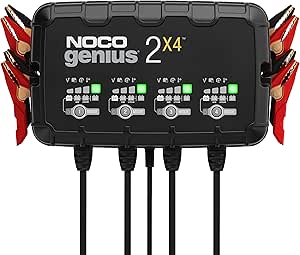
NOCO GENIUS2X4 6V/12V Four-Bank Battery Charger and Maintainer

DEWALT 20V MAX XR Hammer Drill and Impact Driver Combo Kit with Two 4Ah Batteries and Charger

DEWALT 20V MAX Brushless 3-Tool Cordless Combo Kit with Drill, Impact Driver, Oscillating Multi-Tool, 3 Batteries and Charger
As an affiliate, we earn on qualifying purchases.
Background on Solid-State Battery Development
Solid-state batteries have been a focus for automakers and battery manufacturers for several years due to their potential to outperform traditional lithium-ion cells. Companies like Toyota, QuantumScape, and Solid Power have been investing heavily in this technology, which promises higher energy density, faster charging times, and improved safety.
Honda’s move to partner with Solid Power follows industry-wide efforts to commercialize solid-state batteries, with some prototypes already undergoing testing. Honda has previously announced plans to expand its EV offerings, but the integration of solid-state batteries could be a game-changer in terms of vehicle range and charging infrastructure.
“This collaboration with Solid Power represents a strategic step toward bringing solid-state battery technology to Honda’s future EVs, enhancing performance and safety.”
— Honda spokesperson
What Specific Technologies and Timelines Remain Unclear
Details about the specific technical milestones, production timelines, and commercial deployment dates remain undisclosed. It is unclear when Honda plans to introduce vehicles equipped with solid-state batteries, or how soon Solid Power’s batteries will be ready for mass production and integration into Honda’s models.
Additionally, the exact scope of the partnership—such as the scale of joint investment or the number of models to be affected—is still not publicly confirmed.
Next Steps in Development and Potential Market Impact
Honda and Solid Power are expected to begin joint testing and pilot production efforts over the coming months. Industry analysts will be watching for updates on technical milestones, testing results, and potential pilot vehicle launches. Honda may also announce further collaborations or investments aimed at scaling solid-state battery production.
If successful, Honda’s integration of solid-state batteries could lead to a new generation of EVs with improved range and safety, influencing competitors and possibly prompting industry-wide adoption of the technology within the next 3-5 years.
Key Questions
What are solid-state batteries, and how do they differ from lithium-ion batteries?
Solid-state batteries use a solid electrolyte instead of a liquid one, offering higher energy density, improved safety, and faster charging compared to traditional lithium-ion batteries.
When might Honda start using solid-state batteries in its vehicles?
While specific timelines are not yet confirmed, industry sources suggest Honda aims to introduce solid-state batteries in upcoming EV models within the next 2-4 years, pending successful development and testing.
How significant is this partnership for the EV industry?
This collaboration could accelerate the commercialization of solid-state batteries, potentially transforming EV performance standards and giving Honda a competitive edge in the market.
Will this partnership impact Honda’s current EV plans?
Yes, integrating solid-state batteries could enhance Honda’s future EV lineup by increasing range and safety, aligning with their broader electrification strategy.
Are there any risks or challenges associated with solid-state battery development?
Yes, technical challenges remain, including scaling production, ensuring longevity, and cost reduction. The timeline for commercial deployment is still uncertain.
Source: rss