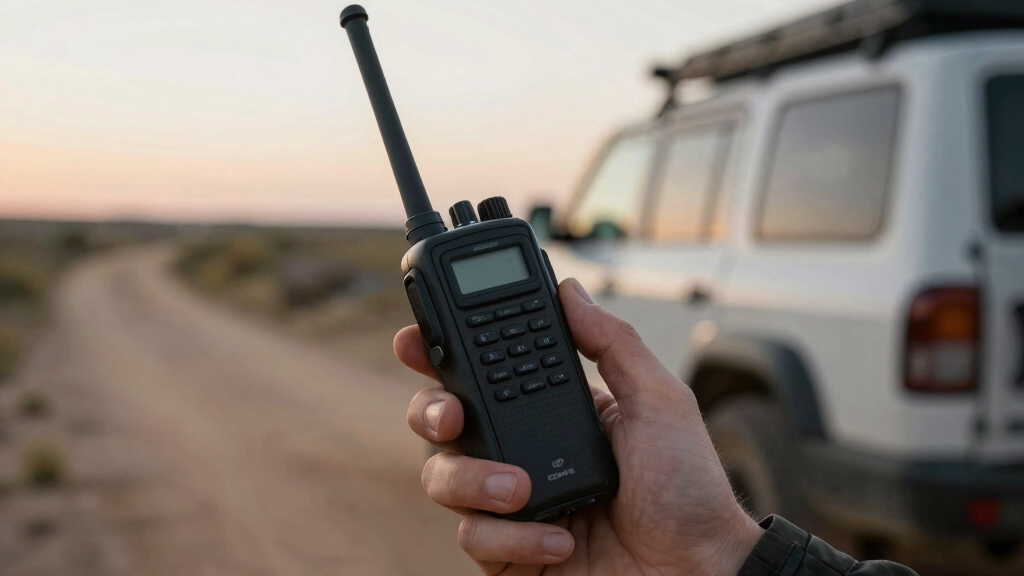
Choosing the best GMRS radio systems for overlanding requires balancing range, durability, and ease of use. The Midland GXT67 stands out as the overall best for its reliable long-range performance and rugged build. For those needing more power, the GMRS Mobile Radio offers 25W output and NOAA alerts, making it ideal for serious off-road trips. The main tradeoffs involve battery life, complexity, and price—more powerful systems tend to be bulkier and more expensive. Continue reading for an in-depth comparison of the top models to find the perfect fit for your overlanding needs.
Key Takeaways
- Higher wattage radios generally provide better range, but often come with increased size and power consumption.
- Durability and waterproof features are essential for overlanding, especially in harsh weather conditions.
- Mobile and base station radios offer more power and features but are less portable, suitable for vehicle-mounted setups.
- Recharging options vary; models with rechargeable batteries are convenient but may require extra accessories or power sources.
- Price differences reflect features like power output, channel capacity, and ruggedness; balancing these factors is key to choosing the right radio.



More Details on Our Top Picks
Midland GXT67 5-Watt GMRS Two-Way Radio – Long Range Walkie Talkie, Waterproof, Repeater Capable, Rechargeable Battery, Hard Case Included
The Midland GXT67 stands out for its durability and ease of use, making it a reliable companion for overlanders who need a sturdy, all-weather radio. Its waterproof IP67 rating ensures it withstands rain, mud, and splashes, while the 5-watt power and repeater support extend communication range significantly, especially in open terrains. Compared with the Midland MXT500, which offers higher power but is less portable, the GXT67’s comprehensive expedition kit and glove-friendly controls make it more practical for on-the-move adventures. The main tradeoff is that it operates solely on GMRS channels, requiring a license in many regions, and battery life may vary with heavy use. This pick makes the most sense for overlanders seeking a durable, ready-to-go radio with long-range capabilities, without complex installation.
Pros:- IP67 waterproof and rugged construction for tough outdoor conditions
- Long-range communication via GMRS repeaters
- User-friendly interface with glove-compatible buttons and backlit display
- Includes a complete expedition kit for outdoor use
Cons:- Requires a license for legal GMRS operation in many regions
- Battery life may diminish with prolonged use
Best for: Overlanding enthusiasts needing a durable, all-weather handheld radio with long-range capabilities
Not ideal for: Users seeking high-power mobile base stations or requiring advanced programming flexibility
- Power:5 Watts
- Waterproof Rating:IP67
- Channels:22 channels + 28 privacy codes
- Battery Type:Li-Ion
- Range:Extended via GMRS repeaters
- Included Accessories:Hard case, desktop charger, AC/DC adapters, belt clip
Bottom line: Best suited for overlanders who prioritize durability and ease of use in rugged environments.
GMRS Mobile Radio, 25W Long Range GMRS Repeater Capable Base Two-Way Radio with NOAA Emergency Alerts, 200 Channels, Programming Cable, Cigar DC Adapter, VOX, Dual PTT for Car, Truck, Off-Road, Overlanding
This 25W GMRS mobile radio offers a significant power boost over handhelds like the Midland GXT67, making it ideal for vehicle-mounted use in overlanding scenarios. Its 200 channels and NOAA alerts provide comprehensive safety and communication options, surpassing the channel count of the Midland MXT275, and supporting versatile operation with dual PTT and VOX. The large screen simplifies control, but it’s less portable and requires installation, which can be a hurdle for those who prefer quick setup. Its performance is heavily dependent on antenna quality and terrain, and it doesn’t support chirp programming software directly. This radio makes the most sense for overlanders who want reliable, long-distance vehicle communication, especially when traveling in remote areas.
Pros:- Up to 30 km communication range depending on terrain
- Supports NOAA weather alerts for safety
- Dual PTT and VOX for flexible hands-free operation
- Large, easy-to-read display
Cons:- Requires installation and antenna setup
- Limited support for software customization without additional tools
Best for: Overlanders with vehicles requiring long-range, stable communication systems
Not ideal for: Solo travelers or those needing portable handheld radios for quick access
- Power:25W
- Channels:200
- Features:VOX, Dual PTT, NOAA Weather Alert, Large Screen
- Included Accessories:Programming Cable, Cigar DC Adapter
Bottom line: Ideal for vehicle-based overlanding setups needing powerful, long-range radios with safety features.
Midland MXT500 50-Watt GMRS Mobile Radio
The Midland MXT500’s 50-watt output makes it a standout for users who need maximum range and signal strength, especially compared with the 15-watt MXT275. Its 8 repeater channels and external magnetic mount with a 2.1dB gain antenna ensure strong, clear signals in challenging terrains. However, its bulkier design and the need for vehicle installation limit portability, and detailed setup can be complex for those unfamiliar with radio systems. Its high power is a clear advantage in remote areas, but the setup and licensing requirements may challenge casual users. This model is best suited for overlanders who prioritize long-range, high-power communication over portability or quick deployment.
Pros:- Powerful 50-watt transmission for extensive range
- Includes external magnetic mount and high-gain antenna
- Multiple repeater channels for flexible communication
- Suitable for fixed, vehicle-mounted setups
Cons:- Requires vehicle installation and possibly professional setup
- Limited portability and more complex to operate
Best for: Overlanders with vehicles seeking maximum range and reliable communication in remote areas
Not ideal for: Solo hikers or campers who need handheld, portable radios
- Power:50 Watts
- Channels:8 Repeater Channels
- Design:Compact
- Antenna:External magnetic mount, 2.1dB gain
Bottom line: Best for vehicle-based users who need the highest power for remote, long-distance communication.
Rugged Radios GMRS Two Way Handheld Radio Walkie Talkie for Hiking Camping Overlanding Off Road – Safety Orange, Long Range, Weather Channels, Rechargeable Battery
This Rugged Radios GMRS handheld excels in portability, making it a prime choice for overlanders who value quick deployment and mobility. Its 22 channels, NOAA weather channels, and a maximum range of about 3 miles are suitable for short to medium distances in open terrain. Compared with larger radios like the Midland GXT67, this unit offers easier handling and is more practical for activities like hiking and camping, but its limited range and fewer features restrict its use in dense environments or for long-distance communication. Its water-repellent and dust-proof design adds resilience, but terrain and weather conditions can greatly affect actual range. This radio is best for overlanders who prioritize lightweight, easy-to-carry radios for close-range to moderate contact.
Pros:- Compact and lightweight for easy portability
- Water-repellent, dust-proof design for tough outdoor use
- Includes NOAA weather channels for emergency alerts
- Long-range capable up to 3 miles in open terrain
Cons:- Range may be limited in dense environments or urban areas
- Limited to GMRS frequency range, not compatible with all radios
Best for: Overlanders and outdoor enthusiasts who need a rugged, portable handheld for short-range communication
Not ideal for: Those requiring long-range or vehicle-mounted solutions for extended coverage
- Number of Channels:22
- Frequency Range:462-467 MHz
- Talking Range:Up to 3 miles
- Voltage:5 Volts
- Features:NOAA Weather Channels, Water Resistant
Bottom line: Perfect for overlanders needing a durable, portable radio for close- to mid-range communication on outdoor adventures.
Midland MXT275VP4 15-Watt GMRS MicroMobile Two-Way Radio with Roll Bar Mount Antenna and Extension Cable
The Midland MXT275VP4 offers a good balance of power and versatility for off-road vehicles and overlanding setups, with 15 watts providing solid communication range. Its inclusion of a roll bar mount antenna and extension cable simplifies installation in most vehicles, making it suitable for those who want reliable, vehicle-mounted communication without extensive setup. Compared to handheld options like the Rugged Radios, this radio benefits from stronger signal strength and dedicated vehicle mounting, but it requires FCC licensing and depends heavily on terrain and antenna quality for optimal performance. It’s a practical choice for overlanders who want a dependable, mounted radio that can handle long-distance communication in rugged terrains.
Pros:- 15-watt power output for extended range
- Includes roll bar mount antenna and extension cable
- Supports NOAA weather alerts for safety
- Flexible mounting options for various vehicles
Cons:- Requires FCC license for operation
- Performance varies with terrain and antenna quality
Best for: Overlanders with vehicles seeking a mounted, long-range communication solution
Not ideal for: Campers or solo hikers who need handheld, portable radios without vehicle installation
- Power:15 Watts
- Channels:1-7 & 15-22 GMRS channels
- Privacy Codes:142 CTCSS/DCS
- Weather Alerts:NOAA Weather Scan and Alert
- Includes:Roll bar mount antenna, microphone extension cable
Bottom line: Great for vehicle-mounted overlanding setups needing reliable, long-range radio communication.
Rugged Radios GMRS Two Way Handheld Radio Walkie Talkie for Hiking Camping Overlanding Off Road – Grey, Long Range, Weather Channels, Rechargeable Battery
This rugged handheld stands out for its combination of long-range communication and outdoor-specific features, making it ideal for overlanding adventures where durability and emergency alerts matter. Compared with the BAOFENG GMRS-15 Pro, it offers a more rugged build and a built-in flashlight, but it doesn’t have as many channels or advanced programmability. The NOAA weather channels add a layer of safety, and the LCD screen makes operation straightforward. However, it requires a GMRS license in many regions, and the battery life can be inconsistent with heavy use. This model is best suited for overlanders needing a tough, reliable handheld that combines essential outdoor features but not for those who want extensive channel customization or use in heavily rain-prone areas without additional protection.
Pros:- Long-range communication suitable for remote areas
- Includes NOAA weather channels for emergency updates
- Built-in flashlight and LCD screen enhance usability
Cons:- Requires a GMRS license for legal operation in many regions
- Battery life can vary significantly with use
- Limited to GMRS frequency range, not UHF or VHF
Best for: Overlanders and outdoor enthusiasts seeking a durable, easy-to-use handheld with weather alerts and long range
Not ideal for: Users requiring extensive channel customization or waterproofing for heavy rain environments
- Frequency:GMRS
- Channels:22
- Privacy Codes:121
- Weather Channels:Yes
- Battery Type:Rechargeable
- Features:Built-in flashlight, LCD screen, FM radio
Bottom line: This pick is best for overlanders prioritizing durability and weather alerts in a handheld format.
Radioddity 2 Pack GM-30 GMRS Handheld Radio – 5W Long Range Two-Way Radio for Adults, Repeater Capable, NOAA Scanning, with Programming Cable
The Radioddity GM-30 shines for its 5W power, supporting up to 5 miles of clear communication, and its dual-band scanning makes it more versatile than the BAOFENG GMRS-15 Pro. Its ability to scan NOAA weather channels and support for repeater channels makes it particularly useful for overlanding where extended range matters. The inclusion of a programming cable allows customization, but some users find the menu system complex, and its IP54 water resistance may fall short in heavy rain. Compared to the rugged Rugged Radios GMR2 Plus, it offers more technical flexibility at the cost of simplicity. This radio is best for overlanders who want flexible, long-range handhelds with advanced features and don’t mind some complexity in programming but not for those expecting full waterproofing or plug-and-play ease.
Pros:- Supports up to 5 miles of range in open terrain
- Includes NOAA weather alerts and scanning
- Dual-band UHF & VHF reception with customizable channels
- Rechargeable via USB Type-C for convenience
Cons:- Limited water resistance, not suitable for heavy rain
- Requires two batteries for continuous use
- Menu programming can be complex for some users
Best for: Experienced overlanders who need a versatile, programmable handheld with repeater support
Not ideal for: Beginners or users expecting a fully waterproof device for extreme weather conditions
- Number of Channels:250
- Power:5W
- Range:Up to 5 miles
- Water Resistance:IP54
- Connectivity:GMRS, UHF
- Features:NOAA scanning, programmable channels
Bottom line: This model is ideal for experienced overlanders seeking flexible, long-range handhelds with repeater capability.
Midland MicroMobile GMRS Radio MXT275, 15 Watts, Two-Way with External Magnetic Mount Antenna
The Midland MXT275 delivers impressive 15W power, making it a leading choice for vehicle-based communication where up to 50 miles of range is possible under ideal conditions. Its external magnetic mount antenna offers flexible placement, surpassing handheld options like the BAOFENG GMRS-15 Pro, especially on overlanding trips where vehicle-mounted radios are preferred. However, it’s not water-resistant, limiting its use in heavy rain, and it requires a 12V vehicle power source. Its user interface is straightforward, but programming can be complex for newcomers. Compared with mobile units like the Radioddity DB20-G, the MXT275 is more accessible and portable, fitting well into a vehicle setup. This radio makes the most sense for overlanders with a vehicle setup seeking reliable, high-power communication but not for those needing waterproofing or handheld flexibility.
Pros:- Powerful 15-watt transmission for long-range communication
- Includes NOAA weather scan and alert features
- Detachable magnetic mount antenna for versatile setup
- Compatible with Midland FRS and GMRS radios
Cons:- Not waterproof, unsuitable for heavy rain or water exposure
- Requires vehicle power connection
- Programming can be challenging for beginners
Best for: Overlanders needing a powerful, vehicle-mounted radio for extended range communication
Not ideal for: Solo hikers or campers relying solely on handheld radios in harsh weather conditions
- Number of Channels:15
- Power:15 Watts
- Range:Up to 50 miles
- Frequency Range:462-467 MHz
- Water Resistance:Not water resistant
- Features:Magnetic mount, NOAA weather alerts
Bottom line: This radio is best for overlanders with vehicle setups seeking reliable long-distance communication in open terrain.
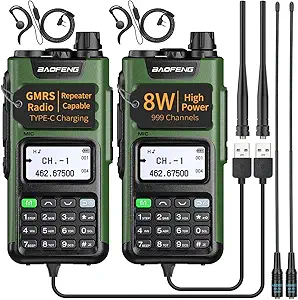
BAOFENG GMRS Radio Handheld Long Range GM-15 Pro 8W Walkie Talkie (2 Pack)
The BAOFENG GM-15 Pro offers a solid 8W output, providing a range of 2-5 miles depending on terrain, which makes it suitable for general overlanding needs at a budget. Its 250 channels and NOAA weather alerts add versatility, but compared with the Rugged Radios GMR2 Plus, it’s less rugged and lacks a built-in flashlight or LCD display, making it less ideal for rugged outdoor conditions. The multiple charging options enhance convenience, yet its range diminishes significantly in urban environments, and its durability may not withstand tough off-road conditions as well. For those prioritizing affordability over ruggedness, it’s a reasonable choice, but it’s not suited for extreme weather or heavy-duty use. This radio makes sense for budget-conscious overlanders who want basic, long-range communication without extra frills but not for those needing rugged, weatherproof handhelds.
Pros:- Long-range communication up to 5 miles in open areas
- Includes NOAA weather alerts for safety
- Multiple charging options for convenience
- Affordable price point for two-pack
Cons:- Limited durability and ruggedness
- Range drops in urban or heavily obstructed environments
- Battery life not explicitly specified
Best for: Budget-minded overlanders or casual outdoor users needing reliable communication
Not ideal for: Heavy-duty off-roaders or those in severe weather environments requiring rugged waterproof radios
- Power:8W
- Channels:250
- Range:2-5 miles
- Repeater Channels:24
- Weather Alerts:Yes
- Dimensions:Not specified
Bottom line: This pick is best for budget-conscious overlanders looking for basic long-range handhelds in open terrain.
Midland GXT1000VP4 GMRS Two-Way Radio 2-Pack
The Midland GXT1000VP4 stands out for its impressive range of up to 22 miles, making it a reliable choice for overlanding groups covering expansive areas. Compared to smaller models like the Midland GXT67, it offers longer communication distances, which are crucial in rugged terrains where line-of-sight may be limited. Its waterproof design ensures durability against the elements, and the inclusion of NOAA weather alerts adds an extra layer of safety. However, the extensive feature set and 50 channels with 387 privacy codes can make the interface seem complex for casual users. Its rechargeable batteries are convenient but require regular charging, which can be a hassle during extended trips. Despite the potential learning curve, this set provides robust, long-range communication that is essential for coordinating in remote environments.
Pros:- Long-range communication up to 22 miles for wide-area coverage
- Waterproof design withstands rain and splashes during outdoor adventures
- Numerous privacy codes for secure conversations
- Includes NOAA weather alerts for safety
Cons:- Range can significantly decrease depending on terrain and obstacles
- Requires rechargeable batteries that need regular charging
- Complex interface may overwhelm beginners
Best for: Overlanding groups needing reliable, long-distance communication and weather alerts in rugged outdoor conditions
Not ideal for: Casual hikers or solo travelers who prefer lightweight, simple radios without extensive features
- Channels:50
- Range:Up to 22 miles
- Privacy Codes:387
- Weather Alerts:Yes
- Battery:Rechargeable Nickel Battery
- Waterproof:Yes
Bottom line: This radio is best suited for overlanding groups who prioritize range and durability, accepting some complexity in exchange.
How We Picked
The products in this roundup were evaluated based on performance, durability, usability, and value. Priority was given to radios with sufficient range for overlanding, rugged construction, and user-friendly interfaces. We also considered additional features like NOAA alerts, programming options, and battery life, as these impact real-world usability. The ranking reflects a balance between power, durability, and affordability, ensuring each model offers distinct advantages for different overlanding scenarios.Factors to Consider When Choosing Best GMRS Radio Systems For Overlanding
Selecting the best GMRS radio system for overlanding involves understanding several key factors that affect performance and convenience. While high wattage radios deliver longer range, they may be bulkier and drain batteries faster. Durability and waterproofing are vital, as overlanding exposes equipment to dirt, mud, and weather. Ease of use, such as simple controls and clear displays, can make a significant difference during long trips. Lastly, consider your power options—rechargeable batteries are convenient, but external power sources can extend usability for extended adventures.Power and Range
Wattage directly impacts how far your radio can communicate. Higher wattage models like the 50W Midland MXT500 afford longer range, which is advantageous in remote areas. However, increased power often means larger size and higher power consumption, so balance your needs based on trip length and portability preferences. For most overlanding, a 15-20W radio offers a good compromise between range and portability, but if you plan to traverse vast distances or rugged terrain, investing in higher wattage can be worthwhile.
Durability and Weather Resistance
Overlanding exposes equipment to rough conditions, making durability non-negotiable. Waterproof and dustproof ratings, like IP67, ensure your radio withstands rain, mud, and shocks. Cheaper or less rugged models may fail prematurely, causing communication breakdowns in critical moments. Consider models with robust casing and weather channels, which often come with rugged certifications, to maintain reliable communication regardless of environmental challenges.
Usability and Features
Ease of use is vital when you’re on the trail, especially with gloves or in emergencies. Look for clear displays, simple controls, and features like VOX for hands-free operation. Repeater capability and NOAA alerts add functionality but can increase complexity. Consider whether the radio’s interface matches your comfort level—more features are useful but can complicate operation for beginners. The most effective models strike a balance between advanced features and straightforward usability.
Power Options and Battery Life
Battery life influences how long you can stay connected without recharging. Rechargeable batteries provide convenience but may require extra gear, while external power options like vehicle adapters expand usage. Some models include low-battery alerts, which help avoid unexpected communication failures. For multi-day trips, prioritize radios with long-lasting batteries or the ability to swap in fresh batteries easily, ensuring you stay connected when it matters most.
Price and Value
Price varies widely based on wattage, features, and ruggedness. While high-end models offer the best range and durability, they come at a premium. Budget options might suffice for casual overlanding but may lack range or weather resistance. Consider your trip’s demands and how much you’re willing to invest. Sometimes, spending a bit more upfront yields better reliability and longevity, especially if your trips are frequent or in challenging environments.
Frequently Asked Questions
How far can a GMRS radio for overlanding realistically transmit?
Most GMRS radios designed for overlanding have a range of 1 to 5 miles under typical conditions, but actual distance varies based on terrain, obstructions, and power output. Higher wattage models, like those with 25W or 50W, can potentially reach further, especially in open areas. Keep in mind that obstacles like mountains, trees, and buildings significantly reduce effective range. For most overlanding trips, a 15-20W radio offers a reliable balance of range and portability.
Should I choose a handheld or mobile radio for overlanding?
Handheld radios are portable and easy to carry, making them ideal for quick communications and backup. Mobile radios, often installed in vehicles, typically deliver higher power and better antenna options, resulting in longer range and more reliable connections. For overlanding, many enthusiasts opt for a combination—using handhelds for close-range communication or quick checks, and a mobile base for long-distance links. Consider your trip scale and the importance of range when choosing between the two.
What features should I prioritize for overlanding radios?
Durability and weather resistance are critical, so look for waterproof and dustproof ratings. A clear, easy-to-read display and simple controls enhance usability in rough conditions. Repeater capability extends your communication range, especially in remote areas. NOAA weather alerts provide vital updates during storms or emergencies. While advanced features like VOX or multiple channels are helpful, ensure they don’t complicate operation—simplicity can be just as valuable in demanding environments.
Is it better to get a rechargeable or replaceable battery for overlanding radios?
Rechargeable batteries are convenient and reduce waste, but they may require carrying a charger or extra batteries for extended trips. Replaceable batteries offer flexibility; you can carry spares and swap them out when needed, which is especially useful on multi-day adventures. Some radios support external power sources like vehicle adapters, extending their usability. The choice depends on trip length and your setup—consider a model with both options if possible for maximum flexibility.
How much should I expect to spend on a good GMRS radio for overlanding?
Prices range from around $50 for basic handheld units to over $300 for high-powered, feature-rich models. Budget-friendly options often lack the range and durability needed for serious overlanding, while premium models provide extended range, ruggedness, and extra features. For regular overlanding trips in remote areas, investing in a mid-to-high-end radio ensures reliability and safety. Balance your budget with your trip demands, aiming for a model that offers the best value for your specific needs.
Conclusion
For most overlanders, the Midland GXT67 offers a reliable balance of range, durability, and ease of use, making it the best overall choice. Those seeking maximum power and long-range communication should consider the Midland MXT500 or the GMRS Mobile Radio, especially if vehicle installation is an option. Beginners or casual users will find value in budget-friendly models like the BAOFENG GMRS Pro or the Midland GXT1000VP4. For critical off-road adventures, prioritizing rugged construction and weather resistance is essential, while premium buyers might prefer models with advanced features and extensive channel capacity. Matching your specific use case with the right features will ensure your communication stays clear and dependable on every trip.