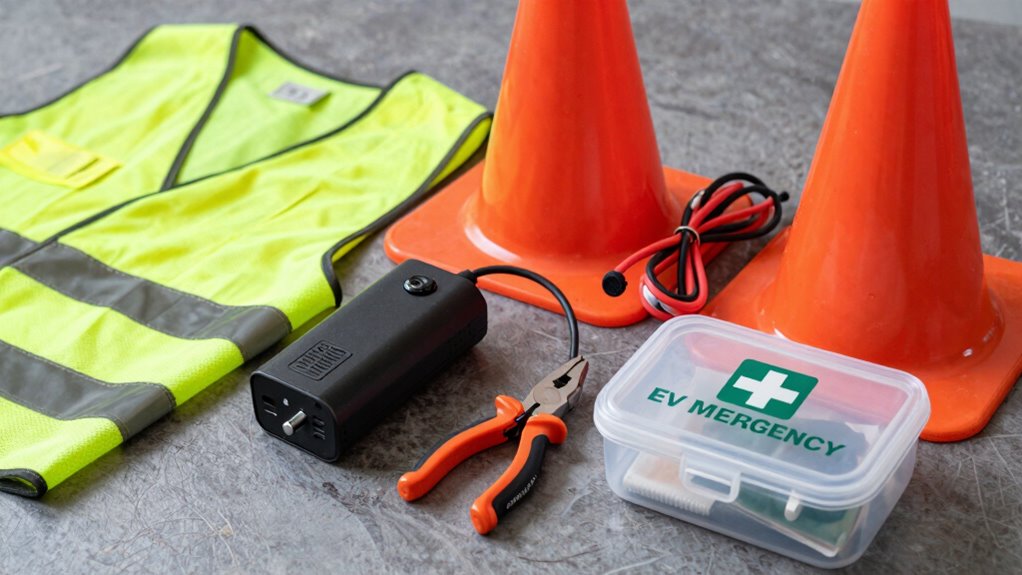

To build an effective EV emergency kit, gather safety gear like fire extinguishers rated for electrical fires, safety gloves, and face shields. Include a well-organized toolkit with charging accessories, extension cords, adapters, and a portable jump starter. Stock essential items such as a first aid kit, reflective triangles, flashlight, snacks, and water. Regularly check and update your supplies, guarantee proper storage, and familiarize yourself with safety procedures. Keep learning techniques to ensure you’re fully prepared for any emergency.

Get business pricing on garage and car supplies
- Business-only prices and quantity discounts
- Tax-exempt purchasing
- Multiple users, one account, clear invoices
Key Takeaways
- Include essential safety items like a fire extinguisher rated for electrical fires, safety gloves, and a face shield.
- Pack compatible charging accessories, extension cords, adapters, and a portable power bank or jump starter.
- Prepare a well-organized kit with reflective triangles, high-visibility vest, flashlight, and first aid supplies.
- Regularly inspect and replace damaged or expired items, ensuring all equipment is functional and accessible.
- Create a safe environment with clear pathways, secure charging setup, and designated emergency access zones.
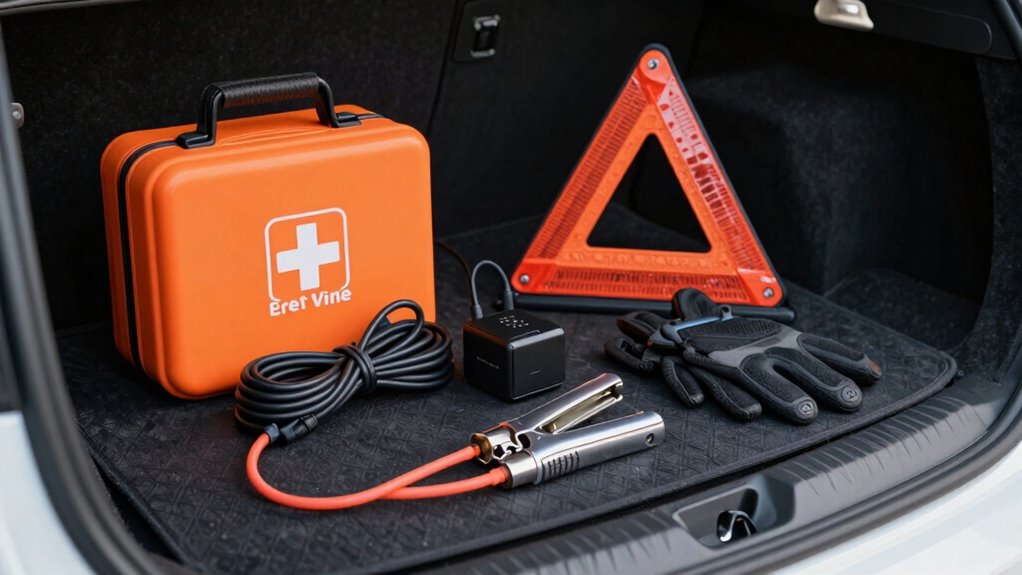
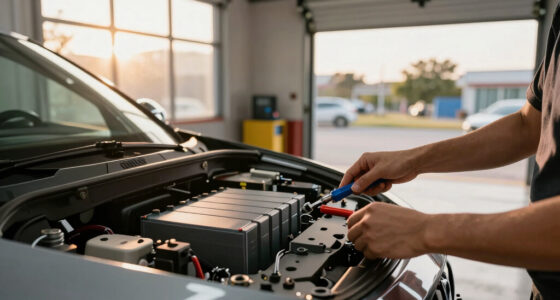
Driving an electric vehicle (EV) offers many benefits, but being prepared for emergencies is just as important as knowing the features of your car. An essential part of that preparation is building an EV emergency kit that’s practical and reliable. To start, focus on battery safety. Your EV’s battery is complex and sensitive, so including items like a fire extinguisher rated for electrical fires is critical. Lithium-ion batteries can pose fire risks if damaged or mishandled, so knowing how to respond quickly can prevent a small issue from escalating. Keep a set of safety gloves and a face shield to protect yourself when handling any battery-related emergencies. Additionally, familiarize yourself with the manufacturer’s guidelines on battery safety to guarantee you’re prepared for any unexpected situations. Utilizing landscaping to create a safe and accessible space around your EV can also help in emergency situations by providing clear pathways and reducing hazards. Ensuring your home charging setup is secure and well-maintained can help prevent issues before they occur, adding an extra layer of safety.
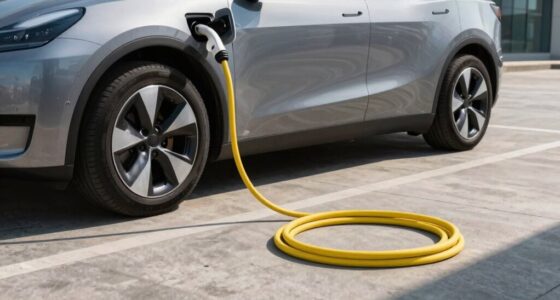
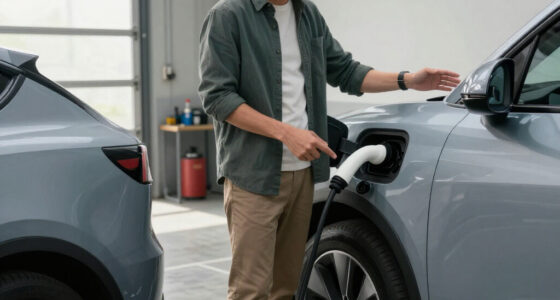
Charging accessories are another indispensable component of your emergency kit. Since EVs rely on charging, having the right tools can make a significant difference if you’re stranded. Pack a portable Level 1 or Level 2 charger, depending on your vehicle’s compatibility, along with extension cords rated for outdoor use. These accessories can help you recharge your vehicle when conventional charging stations aren’t available. A set of adapters for different charging ports is also handy, especially if you’re traveling and might encounter various charging standards. Keep a portable power bank or jump starter designed for EVs, which can provide a quick boost if your battery depletes unexpectedly. These devices are often lightweight and easy to store, giving you peace of mind during long trips.
Beyond charging accessories, your kit should include basic safety items like reflective warning triangles, a high-visibility vest, and a flashlight with extra batteries. Having these on hand ensures you’re visible and can signal for help if needed. A first aid kit is also essential, along with some non-perishable snacks and water, especially if you’re stranded for an extended period. Remember, the goal is to be self-sufficient until help arrives or you can reach a charging station safely. Regularly checking your kit’s contents and replacing expired items can ensure you’re always ready for an emergency.
Finally, keep all these items organized in a sturdy bag or container tucked in your trunk. Regularly check and update your kit to guarantee everything remains functional and up-to-date. Building an EV emergency kit with battery safety considerations and the right charging accessories ensures you’re prepared for unexpected situations, making your driving experience safer and less stressful.
As an affiliate, we earn on qualifying purchases.
Frequently Asked Questions
How Often Should I Update My EV Emergency Kit?
You should update your EV emergency kit at least once a year, especially considering battery maintenance and kit expiration. Regularly check your supplies for expiration dates on items like food, water, and batteries, and replace them as needed. Keep an eye on your vehicle’s battery health and make sure your kit is ready for any unexpected situations. Staying proactive ensures you’re always prepared for emergencies while maintaining your EV’s safety.
Can I Customize My Kit for Different Climates?
Yes, you can customize your kit for different climates by adding climate-specific gear and considering regional preparedness. In colder regions, include thermal blankets, snow chains, and extra warm clothing. For hot climates, pack hydration supplies, sun protection, and cooling towels. Adapting your emergency kit to your environment guarantees you’re prepared for regional challenges, making it more effective and practical. Your kit should evolve with the seasons and regional conditions for maximum safety.
Are There Any Legal Requirements for Emergency Kits?
Yes, there are legal requirements for emergency kits, and you need to guarantee your kit complies with safety regulations in your area. Some jurisdictions mandate specific items, like first aid supplies or warning devices, to promote legal compliance and safety. To stay within the law, check local regulations and guidelines for EV emergency kits, and regularly update your kit to meet any new safety standards or legal requirements.
How Do I Store My Emergency Supplies Safely?
Think of your emergency supplies as treasure waiting to be found. To keep them safe, store your kit in a cool, dry place away from direct sunlight—think of it as giving your supplies a cozy nest. Use clear containers for easy kit organization, so you can locate what you need swiftly. Regularly check expiration dates and secure everything firmly to prevent chaos during a crisis. Safety and organization keep your kit ready to serve when needed most.
What Are Common Mistakes to Avoid When Building a Kit?
When building your EV emergency kit, avoid common mistakes like neglecting battery safety, which is vital to prevent fires or leaks. Don’t forget to customize your kit based on your specific vehicle and climate needs—generic supplies might not suffice. Also, overpacking or underpacking can be problematic; make sure you include essential items without clutter. Regularly check and update your kit to keep everything functional and relevant.
As an affiliate, we earn on qualifying purchases.
Conclusion
Now that you know what to include, your EV emergency kit can be your lifeline in unexpected moments. But what if a simple tool or item could make all the difference when it truly matters? As you prepare, remember—sometimes the smallest addition can turn a dire situation into a manageable one. Are you ready to build that safety net, so you’re not caught off guard when it counts most? The next step could save more than just time.
As an affiliate, we earn on qualifying purchases.
fire extinguisher for electrical fires
As an affiliate, we earn on qualifying purchases.
As an affiliate, we earn on qualifying purchases.
Halloween Picks
halloween
As an affiliate, we earn on qualifying purchases.