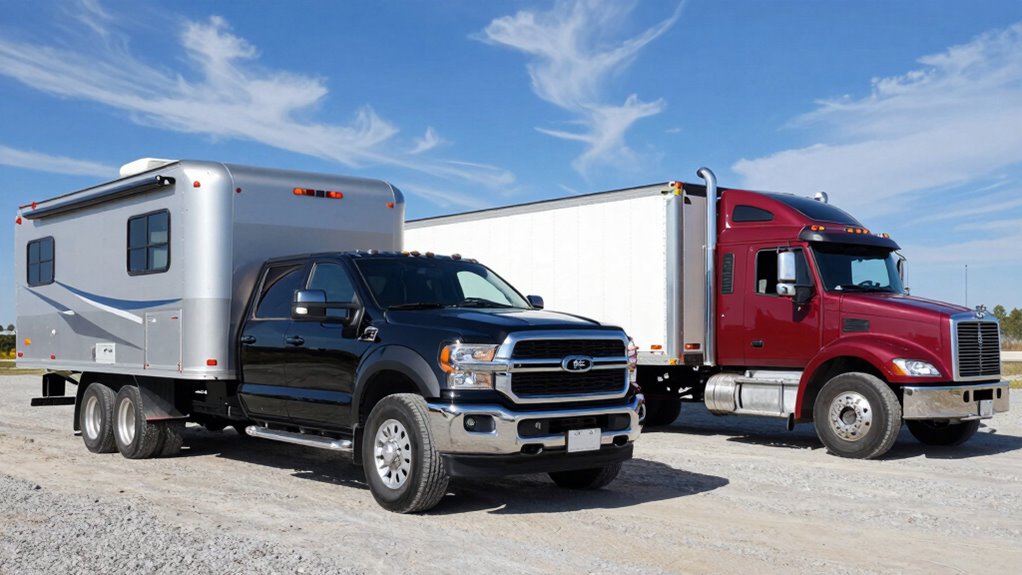

If you’re looking for stability and a secure connection, a 5th wheel may be your best choice, especially for heavy, frequent hauling. It offers better stability over uneven terrain but requires custom installation and precise alignment. A gooseneck, on the other hand, is easier to install, more flexible with truck options, and offers greater maneuverability, though it may sway more if not balanced properly. Knowing your vehicle setup and hauling needs will help you pick the right fit—keep exploring to find out more.

Get business pricing on garage and car supplies
- Business-only prices and quantity discounts
- Tax-exempt purchasing
- Multiple users, one account, clear invoices
Key Takeaways
- Choose a 5th wheel for superior stability and secure connection, ideal for heavy, frequent hauling.
- Opt for a gooseneck if you prefer easier installation and greater vehicle flexibility.
- Consider 5th wheels if you prioritize safety and smoother rides over uneven terrain.
- Select a gooseneck for better maneuverability and simpler removal or switching between trucks.
- Your decision depends on vehicle compatibility, hauling needs, and preference for stability versus flexibility.
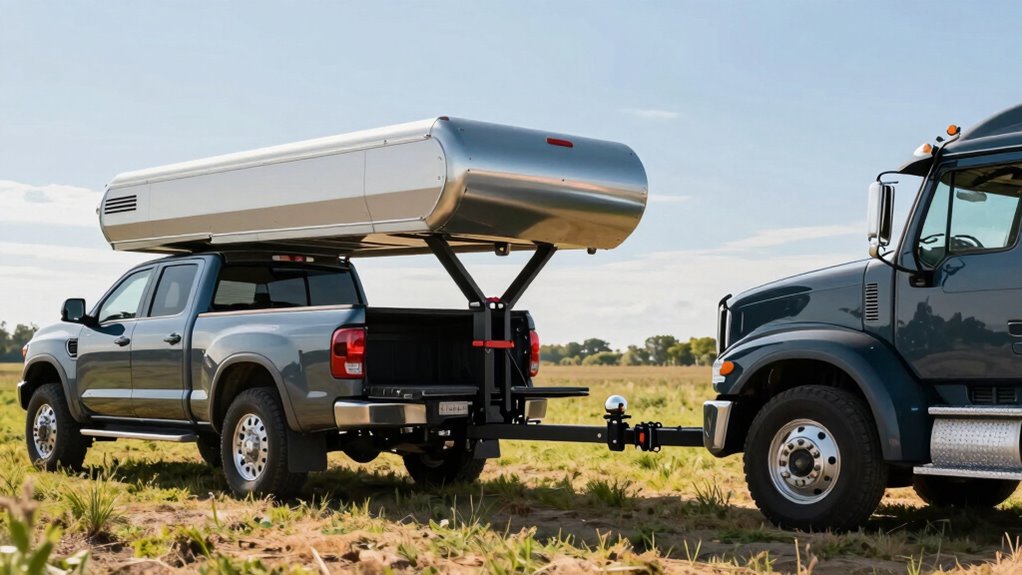
When choosing between a 5th wheel and a gooseneck trailer, understanding the key differences can help you make the right decision for your towing needs. One of the most important factors to evaluate is trailer stability. A 5th wheel trailer typically offers superior stability because of its design; the hitch connects directly over the rear axle of your truck, distributing weight more evenly and reducing sway. This setup makes for a smoother ride, especially when you’re hauling heavier loads or traveling over uneven terrain. On the other hand, gooseneck trailers connect via a ball hitch mounted in the truck bed, which can sometimes lead to more sway and less stability, especially if the load isn’t perfectly balanced. If you’re planning to tow large, heavy loads regularly, the enhanced stability of a 5th wheel can be a significant advantage. Additionally, the hitch connection plays a crucial role in overall towing performance and safety. Hitch compatibility is another key aspect to think about. 5th wheel hitches are specifically designed to fit into a recessed area in the truck bed, requiring a custom installation but providing a secure, often more integrated connection. This setup means you’ll need a compatible receiver and possibly modifications to your truck if it isn’t already equipped. Gooseneck hitches, however, use a ball mounted in the bed, which makes them generally easier to install and remove. They’re compatible with a wider range of trucks without extensive modifications, making them a versatile choice if you switch vehicles often. Keep in mind that the type of hitch also affects your truck’s payload capacity and maneuverability; a 5th wheel hitch tends to be more stable but may require more precise alignment, while a gooseneck offers more flexibility but might need extra caution when turning or backing up. Additionally, understanding the distribution of weight can help optimize your towing safety and efficiency. Choosing the right setup also depends on understanding trailer stability, as this can significantly influence your overall safety and comfort on the road. In terms of overall compatibility, both setups require specific hitches and installation considerations, but your choice will impact how seamlessly your truck and trailer work together. If you prioritize a stable, secure connection and don’t mind the installation process, a 5th wheel might suit you best. If you prefer a setup that’s easier to switch between trucks and offers greater flexibility, a gooseneck trailer could be more suitable. Ultimately, understanding trailer stability and hitch compatibility helps you evaluate which towing setup aligns with your hauling needs, vehicle configuration, and comfort level. Making the right choice ensures safer towing, better handling, and a smoother overall experience on the road.
As an affiliate, we earn on qualifying purchases.
Frequently Asked Questions
Which Towing Setup Is More Cost-Effective Long-Term?
The gooseneck setup is generally more cost-effective long-term because it offers better fuel efficiency and lower maintenance costs. You’ll find that it’s easier on your truck’s suspension, which reduces repair expenses over time. Plus, its streamlined design cuts down on fuel consumption compared to a 5th wheel. Overall, choosing a gooseneck can save you money in the long run, making it the smarter investment.
Can I Switch Between 5th Wheel and Gooseneck Trailers Easily?
You can switch between 5th wheel and gooseneck trailers, but it’s not always seamless. Picture your hitch compatibility as a puzzle piece—some setups easily interchange, while others require adapters or modifications. Trailer interchangeability depends on your truck and hitch system. To switch smoothly, make certain you have the right hitch components, and be prepared for some adjustments. Always double-check compatibility to avoid surprises on the road.
What Are the Legal Weight Limits for Each Setup?
The legal weight limits for 5th wheel and gooseneck trailers vary by state but generally follow federal weight regulations. You’ll often need a special license if your trailer exceeds certain weight thresholds—usually 26,000 pounds gross combined weight. Check your local laws for specific weight regulations and license requirements, as surpassing limits can lead to fines or safety issues. Always stay within legal limits to ensure safe and legal towing.
Which Setup Offers Better Maneuverability in Tight Spaces?
You’ll find that a gooseneck offers better maneuverability in tight spaces due to its smaller turning radius, making parking challenges easier to handle. Its design allows for sharper turns compared to a fifth wheel, which generally has a wider turning radius. If tight parking or steering through narrow roads is your concern, a gooseneck setup gives you more control and flexibility, making your towing experience smoother and less stressful.
Are There Compatibility Issues With Different Truck Models?
You might worry about trailer compatibility with your truck, but most models are designed for specific mounting types. Goosenecks typically require a hitch installed in the truck bed, while 5th wheels need a special hitch mount. Before towing, check your truck’s bed clearance and hitch compatibility to guarantee a seamless fit. Consulting your truck’s manual helps confirm whether your vehicle handles the chosen trailer setup, avoiding any mounting issues.
As an affiliate, we earn on qualifying purchases.
Conclusion
Ultimately, choosing between a 5th wheel and a gooseneck depends on your towing needs and preferences. If you value easier maneuverability and a more stable ride, a 5th wheel might be your best fit. But if you prefer a simpler hookup and more cargo space, goosenecks are a great choice. Think of it like choosing between a sedan and a truck—both get you there, but your lifestyle determines the best fit.
As an affiliate, we earn on qualifying purchases.
As an affiliate, we earn on qualifying purchases.
Halloween Picks
halloween
As an affiliate, we earn on qualifying purchases.