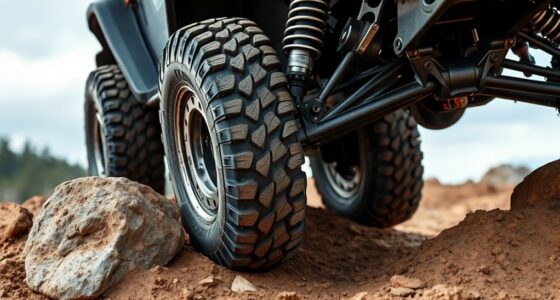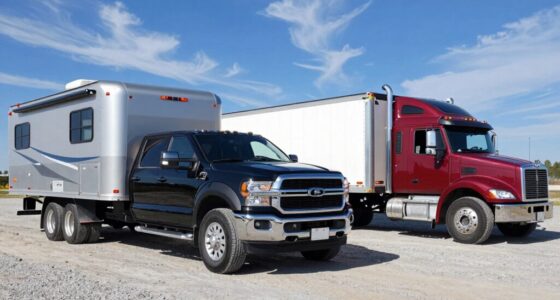
To balance off-road capability with highway comfort, you should fine-tune your tire pressure and suspension settings based on terrain. Lower tire pressure improves off-road grip, but reinflate for highway driving to guarantee a smooth ride. Adjust your suspension for softer settings off-road and stiffer for highway stability. Using versatile shocks and maintaining proper setups helps your vehicle adapt seamlessly. Keep experimenting with these adjustments to find the best mix—more tips await to help you master the balance.

Get business pricing on garage and car supplies
- Business-only prices and quantity discounts
- Tax-exempt purchasing
- Multiple users, one account, clear invoices
Key Takeaways
- Adjust tire pressure appropriately: lower for off-road, higher for highway, and reinflate after terrain changes.
- Use adjustable suspension systems to switch between soft off-road shocks and stiffer highway setups.
- Balance tire grip and ride comfort by selecting suitable tire pressures for each terrain.
- Fine-tune suspension stiffness to absorb obstacles off-road while maintaining stability on pavement.
- Regularly review and modify setup based on terrain and driving conditions for optimal performance.
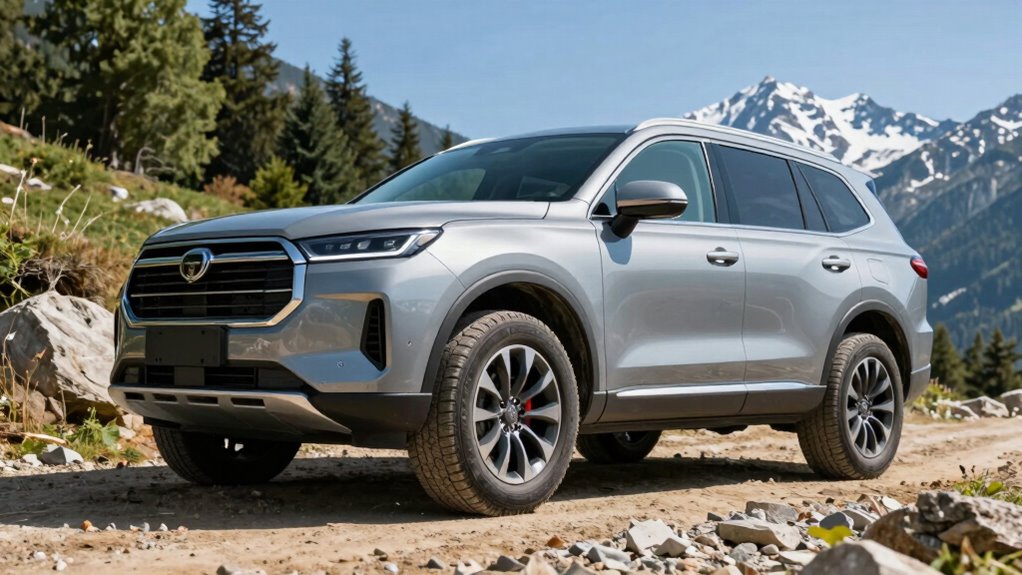
Balancing off-road capability with highway comfort can seem challenging, but it’s entirely achievable with the right approach. The key lies in understanding how your vehicle’s setup affects both performance and comfort. Two critical factors to focus on are tire pressure and suspension tuning. Adjusting these elements allows you to optimize your vehicle for varied terrains without sacrificing too much on-road comfort.
Start with tire pressure. When you’re heading off-road, lowering your tire pressure increases the contact patch, giving you better traction on uneven surfaces like mud, rocks, or sand. However, too low a pressure can cause sidewall damage or lead to a bumpy ride on paved roads. Conversely, maintaining high tire pressure improves fuel efficiency and ride smoothness on highways but reduces off-road grip. The trick is to find a balance—lower your tire pressure appropriately for off-road adventures, then reinflate to higher pressures when returning to highway driving. Many vehicles come with recommended pressure ranges; investing in a good quality tire pressure gauge helps you dial in the perfect setting quickly. Additionally, understanding the impact of tire pressure on both off-road and on-road performance can help you make more informed adjustments.
Suspension tuning also plays a pivotal role. Off-road suspension setups often feature increased travel and softer damping to absorb shocks from rough terrain. On the highway, a stiffer suspension offers better handling and stability at higher speeds. To strike a balance, consider adjustable or aftermarket suspension components that allow you to switch between modes or settings. For example, some vehicles have adjustable shocks or ride height controls that let you stiffen the suspension for highway stability or soften it for off-road comfort. If your vehicle doesn’t have such features, you can still optimize the existing suspension by choosing appropriate shock absorbers and springs designed for dual-purpose use. Proper suspension tuning minimizes body roll and vibration during highway drives while maintaining enough flexibility for off-road obstacles.
adjustable off-road suspension shocks
As an affiliate, we earn on qualifying purchases.
As an affiliate, we earn on qualifying purchases.
Frequently Asked Questions
What Are the Best Tires for Mixed On-Road and Off-Road Driving?
For mixed on-road and off-road driving, you should choose tires with versatile tire tread patterns that provide good traction on various surfaces. Look for tires designed for all-terrain use, which balance ruggedness and comfort. Manage tire pressure carefully—lower it slightly for off-road grip and increase it for highway stability. This approach improves safety and performance, ensuring your tires adapt well to different terrains while maintaining a smooth ride.
How Does Suspension Affect Ride Comfort and Off-Road Performance?
Suspension tuning directly impacts ride quality and off-road performance. When you adjust suspension settings for comfort, it softens, absorbing bumps better on highways, but may reduce off-road traction. Conversely, stiffening the suspension enhances off-road control but can make your ride rougher on pavement. Striking a balance involves customizing your suspension to maintain good ride quality while ensuring adequate off-road capability, so your vehicle performs well in both environments.
Can I Upgrade My Vehicle’s Off-Road Features Without Sacrificing Highway Comfort?
You can upgrade your vehicle’s off-road features without sacrificing highway comfort by choosing the right aftermarket accessories and investing in driver training. Think of your vehicle as a finely tuned instrument—adjust the strings carefully, and it plays beautifully on any terrain. Prioritize quality upgrades like advanced suspension systems and tires designed for both comfort and ruggedness. With proper driver training, you’ll master the art of balancing adventure and everyday driving, ensuring a smooth ride everywhere.
What Safety Features Are Essential for Off-Road and Highway Driving?
You need safety features that enhance both terrain adaptability and overall safety. Look for advanced safety technology like electronic stability control, traction control, and hill descent control, which help you navigate rough terrain confidently. Also, features like adaptive cruise control and lane departure warnings improve highway safety. These elements work together to guarantee you stay secure, whether you’re tackling off-road trails or cruising on the highway, balancing adventure with peace of mind.
How Does Vehicle Weight Impact Off-Road Agility and Highway Stability?
Your vehicle’s weight considerably impacts off-road agility and highway stability. Heavier vehicles offer better terrain adaptation because they’re more stable and can handle rough surfaces confidently. However, increased weight can reduce agility, making sharp turns or quick maneuvers more difficult off-road. On highways, excess weight might lead to decreased fuel efficiency and less nimbleness. Striking a balance ensures your vehicle performs well in both terrains without sacrificing comfort or safety.
As an affiliate, we earn on qualifying purchases.
Conclusion
Finding the perfect balance between off-road prowess and highway comfort might feel like trying to tame a wild steed and keep it suited for Sunday drives, but it’s doable. Focus on choosing adaptable tires, adjustable suspension, and a well-designed cabin. With a little patience and some good ol’ trial and error, you’ll find your ride that handles both the muddy trail and the smooth highway with equal ease. Who knew modern tech could make it feel like a walk in the park?
dual-purpose off-road highway tires
As an affiliate, we earn on qualifying purchases.
As an affiliate, we earn on qualifying purchases.
vehicle ride height adjustment kit
As an affiliate, we earn on qualifying purchases.
As an affiliate, we earn on qualifying purchases.
Halloween Picks
halloween
As an affiliate, we earn on qualifying purchases.