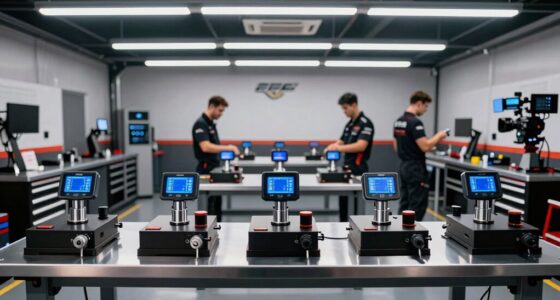
For small shops seeking a premium tire changer and balancer combo, I’d put the KATOOL 2.0HP 830+760 first for its double-assist changer setup, with the ME-T500 and ME-B620 a strong alternative for shops prioritizing a 24-inch turntable and paired equipment. The rear-tilt, auto-measurement combo stands out for shops that want a more automated workflow, while the BILT HARD set offers a simpler 110V-oriented option. The main tradeoffs are automation versus hands-on control, machine capability versus available floor space, and electrical requirements versus installation flexibility. I compare all seven options by their stated features and likely fit for a small-shop workload. Read on for the full breakdown and guidance on choosing a setup that fits your wheels, space, and service mix.

Get business pricing on garage and car supplies
- Business-only prices and quantity discounts
- Tax-exempt purchasing
- Multiple users, one account, clear invoices
Complete the kit


Key Takeaways
- The 830+760 combo leads for shop workflow: its double-assist designation gives it a distinct positioning among these options, though buyers should confirm the exact assist features and included accessories before ordering.
- The ME-T500 and ME-B620 pair is the clearest 24-inch-focused alternative: its named 24-inch turntable makes rim-capacity verification central to the choice, rather than relying on a broad combo label.
- Automation is the standout distinction on the rear-tilt model: auto measurement and a rear-tilt design may reduce repeated manual steps, but buyers should confirm the supported rim range and service requirements.
- Voltage and installation need early attention: the BILT HARD and rear-tilt options specify 110V, while other listings emphasize 2.0HP; shops should verify circuit, air supply, and site requirements for every candidate.
- Model names and packages do not tell the whole story: the KT-T830+KT-B700 includes a bead blaster in its title, while the XK 988-690 and several KATOOL combos need closer confirmation of accessories, capabilities, and warranty terms.


More Details on Our Top Picks
KATOOL 2.0HP Tire Machine Combo Double Assit Tire Changer Machine with Wheel Balancer Machine (830+760)
The double assist arms make this KATOOL a strong fit for a small shop that regularly handles stiff or low-profile tires and wants help managing the mounting process. Its changer has an adjustable clamp range of 12–22 inches outside and 14–24 inches inside, while the 2.0HP, 120V motor is specified for North American power. A bead-blast seater and pedal-controlled inflation add useful support at the work area. Compared with the KATOOL ME-T500/ME-B620, this listing emphasizes added assistance and a bead-blast tank, while the ME-T500/ME-B620 provides more detailed balancer specifications, including 1g precision. The tradeoff is limited published information about this combo’s balancer capacity and cycle time, so buyers who need confirmed throughput figures should favor a better-documented option.
Pros:- Double assist arms help support demanding tire-mounting work.
- 120V, 2.0HP motor is specified for North American use.
- Bead-blast seater and pedal-controlled inflation are included.
- Stated clamp ranges cover a useful selection of passenger-car rims.
Cons:- Balancer capacity, accuracy, and cycle time are not provided in the supplied product details.
- Outside clamping tops out at 22 inches, below the 24-inch range listed for the KATOOL ME 24-inch combo.
- The listing gives limited information for comparing the package’s installation and operating requirements.
Best for: Small North American repair shops that frequently mount difficult tires and value assist arms over published balancer performance figures.
Not ideal for: Shops that need verified wheel-weight limits, balancing accuracy, or cycle-time data before choosing equipment.
- Changer motor:2.0HP
- Power supply:120V, single phase
- Outside clamp range:12–22 inches
- Inside clamp range:14–24 inches
- Mounting head:Stainless steel with plastic rim-protection cover
- Assist system:Double-side assist arms
- Bead seating:Bead-blast seater with post tank
Our verdict“Choose this combo if assisted mounting is your priority and you can confirm the balancer specifications before purchase.”
KATOOL ME 2.0HP 24″ Tire Changer and Wheel Balancer Combo for Automotive Shops and Garages
For a small shop comparing equipment on measurable capacity, this KATOOL combo has a useful advantage: its listing gives the balancer’s wheel-weight and width limits, along with changer capacity. It handles tires up to 39 inches in diameter, while the balancer is rated for wheels up to 143 pounds and 20 inches wide. That makes it easier to check fit against your regular jobs than with the KATOOL 830+760, whose supplied details leave balancer limits unspecified. The stated 6–9 second cycle time also gives buyers a concrete throughput reference, though actual workflow depends on operator and setup. The compromises are substantial shop-floor demands: the machine weighs 473 pounds, setup may be complex, and its 110V supply is a poor match for locations needing 220V equipment.
Pros:- Balancer capacity is specified up to 143 pounds and 20-inch wheel width.
- Changer lists tire capacity up to 39 inches in diameter.
- Stated balancing cycle time of 6–9 seconds helps shops estimate work pace.
- Stainless mounting head and alloy-steel jaws are specified.
Cons:- At 473 pounds, the unit needs a suitable location and careful installation planning.
- 110V-only specification limits use where 220V power is required.
- Setup is described as potentially complex.
Best for: Small automotive shops that want stated wheel-size and weight limits to verify against their common passenger and light-duty vehicle work.
Not ideal for: Shops outside 110V service areas or operators who need equipment that can be moved or installed without substantial floor support.
- Motor power:1.5HP
- Power supply:110V
- Tire diameter capacity:14–24 inches
- Maximum tire diameter:39 inches
- Balancer rim diameter capacity:10–24 inches
- Balancer wheel width capacity:1.5–20 inches
- Maximum wheel weight:143 pounds
- Cycle time:6–9 seconds
- Item weight:473 pounds
Our verdict“Pick this KATOOL when documented capacity matters more than portability or compatibility with 220V shop power.”
KATOOL ME-T500 2.0HP Tire Changer Machine with 24”Turn Table and ME-B620 Wheel Balancer Machine Tire Repair Wheel Changers Combo Garage Equipment (ME-T500 & ME-B620)
The ME-T500/ME-B620 stands out for a small shop that wants more guidance from the balancer, not just a broad rim range. The built-in fault diagnosis and self-calibration features can simplify routine setup, and the listed balancing precision is 1g. Its balancer accepts 10–24-inch rims and wheels up to 144 pounds, while the changer pairs a 2.0HP motor with a center auxiliary-arm layout that leaves more working space around the turntable. Compared with the KATOOL ME 24-inch combo, this listing supplies more detail about balancer calibration and operation; the ME 24-inch listing, by contrast, specifies a 6–9 second cycle time. The ME-T500/ME-B620’s stated balancing time is 8–10 seconds, and its substantial 291-pound net combined weight calls for a planned installation spot.
Pros:- Balancer includes fault diagnosis and self-calibration.
- Listed balancing precision is 1g.
- Center auxiliary-arm design is described as providing more operating space.
- Balancing capacity covers 10–24-inch rims and wheels up to 144 pounds.
Cons:- Listed balancing time is 8–10 seconds, slower than the 6–9 seconds stated for the KATOOL ME 24-inch combo.
- The changer and balancer have a combined listed net weight of about 291 pounds.
- Changer outside clamping is listed to 20 inches in the detailed product description, despite a conflicting 12–22-inch claim elsewhere in the listing.
Best for: Small shops that want diagnostic and self-calibration functions on the balancer and regularly service rims within the 24-inch range.
Not ideal for: Shops focused on the shortest stated balancing cycle or buyers who need a compact, easy-to-relocate package.
- Changer motor power:2.0HP
- Changer power supply:120V, single phase
- Changer inside clamp range:14–24 inches
- Changer outside clamp range:12–20 inches in detailed description
- Balancer rim diameter:10–24 inches
- Balancer wheel width:1.5–20 inches
- Maximum wheel weight:144 pounds
- Balancing precision:1g
- Balancing time:8–10 seconds
Our verdict“Choose the ME-T500/ME-B620 if balancer diagnostics and self-calibration matter more to your shop than cycle speed or easy relocation.”
KATOOL 2.0HP Tire Changer Bead Blaster Wheel Balancer Machine Combo KT-T830+KT-B700
This KATOOL’s main advantage is its wider stated changer range: inside clamping reaches 26 inches, which gives a small shop more room for larger rims than the 24-inch ceiling on the KATOOL ME-T500/ME-B620. That extra reach is useful only if those jobs are part of your regular workload; it does not make the unit an easy fit for every small garage. At 583 pounds, with listed dimensions of 47 by 39 by 34 inches, it needs a permanent, well-planned floor position. The description also highlights bead-blast operation and reduced physical strain, but provides few balancer figures, such as wheel-weight capacity or cycle time. Compared with the XK 988-690, which lists those balancing details and a 155-pound wheel limit, this option is harder to evaluate for balancing throughput before buying.
Pros:- Inside clamp range extends to 26 inches.
- Bead-blast feature is included in the described combo.
- Large-rim capacity exceeds the 24-inch maximum stated for the KATOOL ME-T500/ME-B620.
- Product description cites reduced operator strain during tire work.
Cons:- At 583 pounds, installation and relocation require significant planning.
- Balancer wheel-weight limit, precision, and cycle time are not supplied.
- The listed model information conflicts: the title gives KT-T830+KT-B700, while the specs show 530Z+600.
Best for: Small tire shops that routinely handle larger rims and have the floor space and installation support for a heavy, fixed machine.
Not ideal for: Home garages, mobile operators, or shops whose typical jobs stay within 24-inch rims and require clear balancer performance data.
- Outside clamp range:12–24 inches
- Inside clamp range:14–26 inches
- Cylinder size:8 inches
- Item weight:583 pounds
- Dimensions:47 × 39 × 34 inches
- Title model designation:KT-T830+KT-B700
- Model listed in specifications:530Z+600
Our verdict“This is the KATOOL to shortlist when larger rims are routine and your shop can accommodate a heavy machine with incompletely documented balancer specs.”
XK Tire Changers Machine and Wheel Balancer Combo, 988-690, Uncover
The XK 988-690 is the most fully documented choice here for balancing flexibility: the 690 balancer lists dynamic, static, ALU, and motorcycle modes, a 155-pound wheel limit, and a 4–7 second cycle. That gives a small shop more defined balancing options than the KATOOL 830+760, whose supplied data does not state comparable balancer limits or modes. The 988 changer has a bead blaster, a 2500kgf bead-breaker force, and an outside clamp range of 12–20 inches; inside clamping reaches 12–24 inches. Its listed 110V supply for the changer and 110/220V specification for the balancer may offer flexibility, but buyers should verify the electrical requirements for each unit. At 840 pounds for the combo, this is a fixed-installation purchase, not a compact garage solution.
Pros:- Balancer lists dynamic, static, ALU 1–3, and motorcycle modes.
- Balancer is rated for wheels up to 155 pounds with a stated 4–7 second cycle.
- Bead-blast function and 2500kgf bead-breaker force are specified.
- Balancer power supply is listed as 110/220V.
Cons:- The 840-pound listed combo weight makes installation and relocation demanding.
- Changer outside clamping is limited to 12–20 inches, narrower than several alternatives here.
- The changer is listed as 110V while the balancer is listed as 110/220V, so shop power needs checking for both units.
Best for: Established small shops that balance varied wheel types and want listed balancing modes, a fast stated cycle, and a 155-pound wheel limit.
Not ideal for: Small garages with limited floor support, or buyers needing a changer with outside clamping beyond 20 inches.
- Changer model:988
- Balancer model:690
- Changer power supply:110V
- Changer outside clamp range:12–20 inches
- Changer inside clamp range:12–24 inches
- Maximum wheel diameter:41 inches
- Balancer rim diameter:10–24 inches
- Balancer maximum wheel weight:155 pounds
- Balancer cycle time:4–7 seconds
Our verdict“Choose the XK 988-690 for its documented balancing modes and capacity if your shop can support the heavy installation and work within its changer clamp range.”
BILT HARD 110V 2.0HP Tire Changer and Wheel Balancer Combo for Shop and Garage
The BILT HARD stands out for shops that need one combo to handle a broad mix of wheels without stepping up to the more feature-heavy rear-tilt package. Its changer accepts 12- to 24-inch rims and tires up to 39.4 inches, while the balancer covers wheel diameters from 10 to 28 inches. That range suits a small general repair shop serving varied cars and light vehicles better than a setup focused on narrower fitment needs. The 2.0HP motor and manual controls keep the offer straightforward, and rim protection is a useful safeguard for shops working with finished wheels. Compared with the automatic-measurement combo, this one has fewer described convenience features. Its 110V operation fits many garages, but buyers should confirm their circuit can support the equipment. Weight is not specified, which makes space planning less certain.
Pros:- Changer supports 12- to 24-inch rims and tires up to 39.4 inches.
- Balancer covers a 10- to 28-inch wheel-diameter range.
- 2.0HP motor is suited to demanding tire work.
- Rim-protection features and manual controls favor a straightforward workflow.
Cons:- Does not list the automation and laser-guidance features described for the rear-tilt combo.
- Weight is not specified, limiting advance planning for delivery and shop layout.
- Requires a suitable 110V/60Hz outlet.
Best for: Small general repair shops and serious garage operators that service varied wheel sizes and want a 110V combo with manual controls.
Not ideal for: Shops prioritizing automated measurements, laser guidance, or detailed setup information, and buyers who need a stated machine weight before planning installation.
- Rim compatibility:12-24 inches
- Tire compatibility:Up to 39.4 inches
- Wheel diameter range:10-28 inches
- Wheel width range:1.5-18 inches
- Motor power:2.0HP
- Operation power:250W
- Voltage:110V/60Hz
- Noise level:70dB
Our verdict“Choose the BILT HARD if broad tire-size coverage and a straightforward 110V setup matter more than advanced automation.”
Tire Changer and Automatic Wheel Balancer Combo with Rear-Tilt & Auto Measurement, 110V for 10-26″ Rims
This combo is the stronger fit for a small shop trying to reduce manual measuring and build a more guided wheel-service process. The balancer supports 10- to 26-inch rims and includes auto measurement, laser guidance, and AI modes; the changer uses a rear-tilt design and handles 13- to 26-inch rims. Those features set it apart from the BILT HARD, whose appeal is broader stated tire capacity and a simpler manual-control approach. The tradeoff is a more demanding installation: the listing describes a reinforced steel changer and a 40mm balancer spindle, but provides no overall dimensions or weight. Its 110V supply may suit some garages, yet the advanced controls could call for operator training. Small shops should weigh the workflow gains against space, setup, and learning demands.
Pros:- Auto measurement, laser guidance, and AI modes provide more guided balancing than the BILT HARD’s described manual controls.
- Rear-tilt changer design supports a distinct professional workflow.
- Balancer accepts 10- to 26-inch rims, while the changer covers 13- to 26-inch rims.
- Construction details include 2.75mm steel for the changer and a 40mm balancer spindle.
Cons:- Changer’s stated rim range starts at 13 inches, narrower at the small end than the BILT HARD’s 12-inch minimum.
- Large, heavy format requires substantial space and careful setup.
- Advanced controls may require training, and overall dimensions and weight are not provided.
Best for: Small tire shops with trained staff that want guided balancing features and handle wheels within the changer’s 13- to 26-inch range.
Not ideal for: One-person garages with limited floor space, operators who prefer simple manual controls, or shops that regularly service tires beyond the stated changer rim range.
- Tire changer rim range:13-26 inches
- Wheel balancer rim range:10-26 inches
- Voltage:110V
- Tire changer material:2.75mm steel
- Wheel balancer spindle:40mm
- Changer design:Rear-tilt
- Measurement feature:Auto measurement
- Additional guidance:Laser guidance and AI modes
Our verdict“Pick this combo if your shop values automated measuring and guided balancing enough to accommodate the added setup and training needs.”

How We Picked
I compared the seven listed combinations through the needs of a small shop: the changer’s stated rim range or turntable size, assist and automation features, balancer pairing, power information, and how clearly the package is described. I also looked at the practical fit between a machine’s apparent workflow and a shop’s likely constraints, including installation needs, floor space, service mix, and the value of included functions. Where a listing name did not establish a specification, I treat that as a point for buyers to verify rather than assume.
The ranking gives the lead position to the KATOOL 830+760 because the double-assist designation makes it the most workflow-oriented stated package in this group. The ME-T500/ME-B620 and rear-tilt auto-measurement models follow for their specific capacity and automation cues; the bead-blaster combo earns attention for a distinct function. The remaining options are useful alternatives, but their descriptions provide fewer differentiators for ranking them ahead of those picks. None is a universal winner: a shop should choose by verified compatibility and installation fit, not by a combo name alone.
Factors to Consider When Choosing Premium Tire Changer Balancer Combo Options For Small Shops
Before choosing a combo, I’d map the machine to the work your shop actually accepts. A packaged changer and balancer can simplify purchasing, but the right decision depends on wheel compatibility, workflow, utilities, and service support—not just the headline features.
Match stated rim capacity to your real work
Start with the wheels that arrive at your shop most often, then check the machine’s documented clamping range and method of measuring wheel size. A 24-inch turntable description is useful, but it does not by itself confirm that every wheel up to that size is supported in every setup. Ask whether the stated range refers to internal or external clamping and whether adapters are needed for the wheels you service. Shops handling specialty, low-profile, or larger wheels should confirm the exact limits in writing before buying. A common mistake is treating a maximum rim figure as a promise of easy handling across the whole range. If most of your work falls well inside the machine’s limits, ease of use and protection accessories may matter more than chasing the largest number.
Choose automation for the bottleneck, not the label
Assist arms, bead-blast functions, rear tilt, and automatic measurement address different parts of the job. Think about where work slows down: difficult tire mounting, bead seating, repeated measurement, or moving the head and wheel by hand. A feature is valuable when it reduces that specific burden across the jobs you perform regularly. It may add little for a low-volume shop that mostly handles straightforward passenger-car wheels. Ask what is included as standard equipment and what requires an add-on; product titles can make package contents hard to distinguish. Compare the time saved with the added setup, maintenance, and training the feature may bring.
Check power, air, and installation before placing an order
Electrical compatibility is only one part of installation. Confirm the required voltage, circuit capacity, plug or wiring arrangement, and whether the stated horsepower describes the motor or a particular operating component. Many shop machines also rely on a compressed-air supply, so ask for its pressure and volume requirements and compare those with your compressor. Measure the working footprint, including room to position a wheel and move around the machine, rather than checking only the unit’s base dimensions. Delivery access and floor conditions can also affect setup. Verifying these details in advance can prevent a combo from arriving before the shop is ready to run it.
Treat the balancer as part of the workflow
A combo is only as useful as its ability to handle the wheels you balance and the measurements your shop needs. Confirm supported wheel diameter and width, weight capacity, balancing modes, and whether the machine uses manual entry or automatic measurement. Ask what cones, adapters, calibration tools, and wheel-protection pieces come with the package. Shops handling a broad mix of wheels may benefit more from available adapters and clear calibration support than from a feature that sounds advanced but is rarely used. Also consider whether the changer and balancer can be placed together without making the work area cramped. A practical layout can save repeated steps and reduce handling strain.
Compare support and package details, not just machine names
Combo listings can leave important details unclear, including what accessories ship with each machine and which specifications apply to the changer versus the balancer. Request the manuals, complete package list, warranty terms, and service contact before committing. Ask how replacement parts are identified and whether troubleshooting help is available for both units. The bead-blaster wording on the KT-T830+KT-B700 listing, for example, signals a feature to verify in the actual package rather than assume from the title alone. A low-clarity listing can create delays when an adapter or fitting is missing. For a small shop, responsive support may have more day-to-day value than an extra feature with uncertain parts availability.
Spend more where it changes daily work
Paying for assist or automation makes the most sense when it addresses a repeated task, supports the wheel types you take in, or reduces the physical effort required during busy periods. A shop opening its first tire bay may prefer a clear setup, approachable controls, and accessible support over a more complex package. Higher capability can be wasted if your floor plan, power, or air supply cannot support it. Conversely, a shop that regularly handles demanding wheel-and-tire combinations may find that the right assist features are worth prioritizing. Compare the full cost of ownership, including installation, accessories, maintenance, and downtime—not just the listed machine configuration. The best premium choice is the one whose extra capability earns a place in your everyday workflow.
Frequently Asked Questions
Which combo is the strongest starting point for a small shop?
I’d start by comparing the KATOOL 830+760 with the ME-T500/ME-B620 pair. The 830+760 is the lead pick here because its double-assist designation points to a more supported changer workflow, while the ME-T500/ME-B620 makes its 24-inch turntable a clearer capacity cue. Neither description alone confirms every wheel, accessory, or utility requirement. Ask each seller for the full specifications and package list, then match those details to the wheels your shop expects to service. If automation matters most, also compare the rear-tilt model’s auto-measurement details.
Is a 110V combo automatically easier to install?
A stated 110V requirement may suit shops that want to work with a common electrical setup, but it does not prove that the machine will plug into any available outlet. Confirm circuit capacity, wiring, plug type, and the manufacturer’s installation instructions. Check air requirements too, since a compatible outlet will not help if the shop compressor cannot meet the machine’s needs. The BILT HARD and rear-tilt listings identify 110V, but buyers should verify the full requirements for either model. Have an electrician or installer review the specifications if the shop’s circuits are uncertain.
Should I choose a bead blaster or an assist-arm changer?
These features solve different workflow problems, so I’d choose based on the work that causes delays. A bead blaster is aimed at bead seating, while assist features help support tire-changing tasks that can demand extra physical effort or control. The KT-T830+KT-B700 title calls out a bead blaster; the KATOOL 830+760 highlights double assist. Confirm exactly what each package includes and whether the feature suits your most common jobs. Some shops may value both functions, but a feature used only occasionally should not outweigh fit, support, or installation requirements.
What should I verify before ordering a combo online?
Request the full manuals and package contents for both the changer and balancer, not only a summary of the combo. Verify rim and wheel limits, clamping method, power and air needs, included adapters, calibration process, warranty, shipping access, and service contacts. Ask which claims apply to each machine when a title combines several model numbers. Check that the machines fit your planned layout with room to handle wheels safely. Written answers help prevent mismatched expectations about included accessories or installation needs.
When is an automatic-measurement model worth choosing over a simpler combo?
Auto measurement can be worthwhile when repeated manual input slows a steady stream of balancing work or creates avoidable workflow interruptions. The rear-tilt, auto-measurement option is the clearest fit in this group for buyers seeking those features, but its listing still needs verification for supported wheel dimensions, measurement functions, and setup requirements. A lower-volume shop may gain more from a straightforward machine that is easier to install and service. Consider how many jobs would use the automation and whether it changes the time or effort involved in your actual process. Choose it for a measurable workflow benefit, not automation by itself.
Conclusion
Best overall: I’d choose the KATOOL 2.0HP 830+760 for a small shop that wants a changer package distinguished by double assist. Best value-oriented option: the BILT HARD 110V combo is a sensible candidate for shops that prioritize a clearly stated 110V configuration, after confirming its full capabilities and installation needs. Best premium workflow pick: the rear-tilt, auto-measurement combo suits buyers seeking more automation, while the KT-T830+KT-B700 is the specific pick for shops that want to investigate a bead-blaster-equipped package. Best for beginners: I’d favor the option whose seller provides the clearest manual, setup guidance, and support; the listed features alone do not establish which is easiest to learn. For a 24-inch-focused setup, compare the ME-T500/ME-B620 with the ME 2.0HP 24-inch combo and verify the exact limits and package contents. The XK 988-690 remains an alternative, but I’d request clearer specifications before ranking it above options with more explicit feature cues.