Selecting the right thermal imaging camera for electrical work requires balancing thermal resolution with portability and budget. The FLIR C8 Compact Thermal Imaging Camera stands out as the best overall choice due to its MSX technology, which overlays visible-light details onto thermal images for precise component identification. For those prioritizing mobile connectivity, the TOPDON TC001 Mini offers high pixel density in a compact form factor, while the Klein Tools TI250 provides a rugged, standalone option ideal for field technicians who dislike tethering devices. The primary tradeoff in this category is between image clarity and device size; higher resolution sensors often demand larger, heavier housings or premium pricing. Continue reading to see how these models compare on critical metrics like temperature range and emissivity control.

Get business pricing on garage and car supplies
- Business-only prices and quantity discounts
- Tax-exempt purchasing
- Multiple users, one account, clear invoices
Complete the kit


Key Takeaways
- High thermal resolution (320×240 or higher) significantly reduces the ‘spot size’ error, allowing accurate temperature readings on small components like fuses and wire lugs.
- Mobile-only cameras offer superior portability and app integration but rely on the host device’s battery life and can be harder to grip with gloves.
- Standalone units like the Klein TI250 provide better ergonomics for extended scans but lack the advanced post-processing software found in mobile-connected ecosystems.
- Emissivity control is a critical differentiator; models with adjustable emissivity settings yield more accurate readings on shiny metal surfaces common in electrical panels.
- Battery life varies drastically between handheld units (often 6+ hours) and mobile adapters, which drain the phone’s battery and require careful management during long shifts.
| TOPDON TC004 Mini Thermal Imaging Camera |  | Best for Electricians Needing Rugged Portability | Resolution: 128×128 native (240×240 with TISR) | Temperature Range: -4°F to 842°F | Refresh Rate: 25 Hz | VIEW ON AMAZON | See Our Full Breakdown |
| GT14S Thermal Imaging Camera |  | Best Value Dual-Mode Diagnostic Tool | Sensor Sensitivity: < 50 mK | Temperature Range: -4°F to 1022°F | Field of View: 50° | VIEW ON AMAZON | See Our Full Breakdown |
| FLIR TG165-X Thermal Imaging Camera |  | Best for Beginners and Basic Troubleshooting | Resolution: 4,800 pixels (80×60) | Temperature Range: -13°F to 572°F | Frame Rate: ≤ 9 Hz | VIEW ON AMAZON | See Our Full Breakdown |
| VISION Magic Thermal Camera |  | Best for Smartphone Integration and Connectivity | Resolution: 320×240 (QuadIR) | Connectivity: USB-C | Temperature Range: -4°F to 1112°F | VIEW ON AMAZON | See Our Full Breakdown |
| H128 Handheld Thermal Camera |  | Best for Endurance and Rugged Field Use | Resolution: 240×240 (TISR) | Battery Life: 24 hours | Ingress Protection: IP65 | VIEW ON AMAZON | See Our Full Breakdown |
| Klein Tools TI223 Mobile Thermal Imaging Camera | 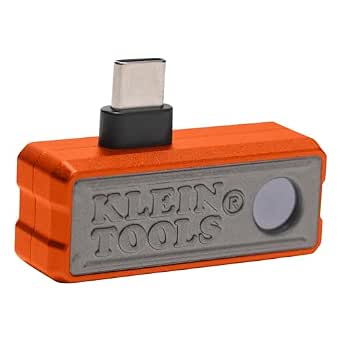 | Best Smartphone Attachment | Resolution: 19,200 pixels | Temperature Range: -4 to 752°F (-20 to 400°C) | Compatibility: iOS and Android (USB-C) | VIEW ON AMAZON | See Our Full Breakdown |
| FOXWELL RT280 Thermal Imaging Camera – 320×240 LCD, 240×180 TISR |  | Best Rugged Standalone | Video Capture Resolution: 320×240 | Effective Still Resolution: 240 pixels | Temperature Range: -4°F to 1022°F | VIEW ON AMAZON | See Our Full Breakdown |
| TOPDON TC001 Mini 384×384 Thermal Imaging Camera for iPhone Android iPad |  | Best High-Resolution Mobile | Resolution: 384×384 thermal images (96×96 IR sensor) | Thermal Sensitivity: ≤40 mK | Refresh Rate: 25 Hz | VIEW ON AMAZON | See Our Full Breakdown |
| FLIR C8 Compact Thermal Imaging Camera – 320×240 MSX, Ignite Cloud |  | Best for Reporting & Sharing | Resolution: 320×240 | Horizontal Field of View: 35° | Pixel Count: 76,800 | VIEW ON AMAZON | See Our Full Breakdown |
| Klein Tools TI250 Rechargeable Thermal Imaging Camera – 19,200 Pixels, 3 Color Palettes, High/Low Temp Points |  | Best Balanced Standalone | Resolution: 19,200 pixels | Temperature Range: -4 °F to 752 °F | Item Weight: 8.6 ounces | VIEW ON AMAZON | See Our Full Breakdown |
| top rated thermal imaging cameras for electrical troubleshooting | Temperature Range | Resolution | Weight |
|---|---|---|---|
| TOPDON TC004 Mini Thermal Imag | -4°F to 842°F | 128×128 native (240×240 with TISR) | 1.03 lbs |
| GT14S Thermal Imaging Camera | -4°F to 1022°F | — | 15.1 ounces |
| FLIR TG165-X Thermal Imaging C | -13°F to 572°F | 4,800 pixels (80×60) | — |
| VISION Magic Thermal Camera | -4°F to 1112°F | 320×240 (QuadIR) | 0.8 ounces |
| H128 Handheld Thermal Camera | -4°F to 842°F | 240×240 (TISR) | — |
| Klein Tools TI223 Mobile Therm | -4 to 752°F (-20 to 400°C) | 19,200 pixels | 1.12 ounces |
| FOXWELL RT280 Thermal Imaging | -4°F to 1022°F | — | — |
| TOPDON TC001 Mini 384×384 Ther | -4 °F to 1,022 °F | 384×384 thermal images (96×96 IR sensor) | — |
| FLIR C8 Compact Thermal Imagin | — | 320×240 | 1.2 pounds |
| Klein Tools TI250 Rechargeable | -4 °F to 752 °F | 19,200 pixels | — |
More Details on Our Top Picks
TOPDON TC004 Mini Thermal Imaging Camera
This unit stands out for its 240×240 TISR resolution, which provides significantly clearer images than the FLIR TG165-X‘s 80×60 sensor, making it far more effective for spotting subtle hotspots in breaker panels. The 15-hour battery life is a major advantage for long shifts, reducing the anxiety of mid-day power failures that plague smaller units. However, the 512 MB storage is a tangible limitation; while it holds thousands of images, it lacks the cloud integration or expandable memory found in premium options, meaning you must offload photos frequently. Compared to the GT14S, the TC004 offers better image clarity but lacks the dual-mode thermometer function, requiring you to switch tools for precise spot readings. It is a solid, pocket-sized choice for professionals who prioritize image quality over connectivity features.
Pros:- Enhanced 240×240 resolution provides clear visual data for diagnostics
- Extensive 15-hour battery life supports full-day inspections
- IP54 rating and 2m drop resistance withstand typical job site hazards
- Built-in photo capture streamlines documentation without extra steps
Cons:- Limited 512 MB internal storage requires frequent data offloading
- No charging adapter included, only a cable
- Lacks wireless connectivity for remote viewing or instant sharing
Best for: Field electricians who need a durable, high-resolution camera that fits easily in a tool pocket.
Not ideal for: Users who need to transfer images instantly to a computer via Wi-Fi or those who rely on cloud storage for reports.
- Resolution:128×128 native (240×240 with TISR)
- Temperature Range:-4°F to 842°F
- Refresh Rate:25 Hz
- Battery Life:15 hours
- Ingress Protection:IP54
- Storage:512 MB eMMC
- Weight:1.03 lbs
Our verdict“Choose this if you need a tough, high-resolution camera for quick visual checks and don’t mind managing local storage manually.”
GT14S Thermal Imaging Camera
The GT14S distinguishes itself with a dual-mode design, combining thermal imaging with a point-and-shoot thermometer. This hybrid approach offers versatility that the TOPDON TC004 lacks, allowing users to get precise spot temperatures without switching devices. The NETD < 50mK sensitivity is impressive for this price point, detecting temperature differences as small as 0.05°C, which is critical for identifying early-stage electrical faults. However, the lack of Wi-Fi or Bluetooth connectivity means all data transfer must be done via cable, slowing down workflow compared to wireless-capable competitors like the RISION Magic. While the 14-hour battery is competitive, the build quality feels less rugged than the IP-rated models. This is an excellent entry-level choice for hobbyists or technicians who need basic thermal and spot temperature capabilities without breaking the budget.
Pros:- Dual-mode functionality includes a dedicated point-and-shoot thermometer
- High sensor sensitivity detects subtle temperature variations
- Long 14-hour battery life supports extended field use
- Customizable alarms help identify overheating components quickly
Cons:- No wireless connectivity for remote viewing or instant image sharing
- Build quality appears less rugged than IP-rated alternatives
- Resolution is lower than dedicated high-end thermal cameras
Best for: Home inspectors and DIY enthusiasts who want both thermal imaging and spot temperature measurement in one device.
Not ideal for: Professional electricians who require wireless data transfer or higher resolution for detailed panel analysis.
- Sensor Sensitivity:< 50 mK
- Temperature Range:-4°F to 1022°F
- Field of View:50°
- Battery Capacity:2500 mAh
- Battery Runtime:Up to 14 hours
- Frame Rate:25 Hz
- Weight:15.1 ounces
Our verdict“This is the best buy if you need a versatile tool that handles both thermal scans and precise spot readings at a lower cost.”
FLIR TG165-X Thermal Imaging Camera
The FLIR TG165-X is widely recognized for its MSX image enhancement, which overlays visual details onto thermal images to make hotspots easier to locate. This is particularly helpful for beginners who might struggle to interpret abstract thermal gradients on the GT14S. The bullseye laser pointer simplifies targeting, ensuring you are measuring the intended component. However, the 80×60 pixel resolution is significantly lower than the TOPDON TC004 or RISION Magic, resulting in blockier images that may miss fine details in dense wiring. The 9 Hz frame rate also makes panning across a panel feel sluggish compared to 25 Hz models. While the 50,000 image storage is robust, the limited resolution and slow refresh rate mean this tool is better suited for quick checks rather than detailed diagnostic reports.
Pros:- MSX technology enhances image clarity by blending visual and thermal data
- Bullseye laser pointer aids in precise target alignment
- Massive internal storage capacity for thousands of images
- Rugged IP54 construction offers protection against dust and water
Cons:- Low 80×60 resolution results in blocky, less detailed thermal images
- Slow 9 Hz frame rate causes lag during movement
- Limited temperature range compared to industrial-grade models
Best for: Novice technicians and homeowners who need a simple, reliable tool for identifying major overheating issues.
Not ideal for: Professionals who need high-resolution imagery for detailed analysis or smooth video capture of moving targets.
- Resolution:4,800 pixels (80×60)
- Temperature Range:-13°F to 572°F
- Frame Rate:≤ 9 Hz
- Storage:Up to 50,000 images
- Ingress Protection:IP54
- Image Enhancement:MSX
- Laser Pointer:Bullseye
Our verdict“Pick this if you prioritize ease of use and brand reputation over high-resolution detail for basic electrical checks.”
VISION Magic Thermal Camera
The RISION Magic leverages its USB-C connectivity to turn smartphones and tablets into powerful thermal displays, offering a level of convenience that standalone units like the H128 cannot match. The 320×240 QuadIR resolution (upscaled from 160×120) provides decent detail, though it relies on software interpolation rather than native pixel density. This makes it ideal for users who want to annotate images or share findings instantly via the VISION View app. However, the lack of Mac support is a significant hurdle for professionals using Apple desktops for reporting. Compared to the TOPDON TC004, which offers native high-resolution capture without a phone, the RISION Magic depends heavily on the host device’s performance and battery. It is a smart choice for those already embedded in the mobile ecosystem, but less reliable as a standalone field tool.
Pros:- Seamless USB-C connectivity with iOS, Android, and Windows
- High-resolution 320×240 output via QuadIR upscaling
- No account registration required for the companion app
- Extremely lightweight at just 0.8 ounces
Cons:- Incompatible with Mac computers
- Native sensor resolution is lower, relying on digital upscaling
- Dependent on host device battery and performance
Best for: Tech-savvy users and contractors who want to capture, annotate, and share thermal images instantly via mobile devices.
Not ideal for: Mac users or those who prefer a standalone device with an integrated screen and no dependency on a phone.
- Resolution:320×240 (QuadIR)
- Connectivity:USB-C
- Temperature Range:-4°F to 1112°F
- Refresh Rate:25 Hz
- Weight:0.8 ounces
- Compatibility:iOS, Android, Windows
- Accuracy:±3.6°F
Our verdict“Select this if you want a lightweight, connected thermal camera that integrates directly with your mobile workflow.”
H128 Handheld Thermal Camera
The H128 excels in durability and endurance, boasting an IP65 rating and 24-hour battery life. This makes it superior to the GT14S for jobs in dusty or wet environments where equipment protection is paramount. The 40 mK thermal sensitivity is excellent for detecting faint heat signatures, comparable to high-end industrial units. However, the single-battery design means if the battery fails mid-shift, you are offline until it recharges, unlike models with swappable cells. While the 240×240 TISR resolution matches the TOPDON TC004, the H128’s bulkier form factor and lack of advanced connectivity features position it as a workhorse rather than a precision tool. It is the ideal choice for maintenance crews working in harsh conditions who value uptime and robustness over sleek design or smart features.
Pros:- IP65 rating provides superior protection against dust and water jets
- Exceptional 24-hour battery life reduces charging frequency
- High thermal sensitivity (40 mK) detects subtle temperature changes
- Rugged drop resistance handles accidental falls from height
Cons:- No hot-swap battery capability for uninterrupted use
- Bulkier design compared to mini thermal cameras
- Lacks advanced connectivity features for instant data sharing
Best for: Industrial maintenance teams and field workers operating in harsh, dusty, or wet environments.
Not ideal for: Users who need hot-swappable batteries for continuous 24/7 operations or prefer compact, smartphone-linked devices.
- Resolution:240×240 (TISR)
- Battery Life:24 hours
- Ingress Protection:IP65
- Thermal Sensitivity:40 mK
- Temperature Range:-4°F to 842°F
- Drop Resistance:6.56 feet
- Frame Rate:25 Hz
Our verdict“This is the right tool if you work in tough environments and need a camera that lasts all day and survives drops.”
Klein Tools TI223 Mobile Thermal Imaging Camera
This device transforms your existing phone into a thermal imager, leveraging the 19,200-pixel resolution for detailed hot-spot identification without the bulk of a standalone unit. It is significantly lighter than the Klein Tools TI250, making it ideal for technicians who prioritize pocketability over standalone durability. The wide temperature range handles most electrical faults, from loose connections to overheating motors. However, it relies entirely on your smartphone’s battery and screen, which can be a liability in bright sunlight or if your phone battery drains quickly. Unlike the FOXWELL RT280, it lacks physical buttons for gloved operation, forcing you to rely on touch controls that may not work well in the field.Pros:- Ultra-compact size fits in a pocket alongside a phone
- High pixel density provides clear thermal details
- Time-lapse video aids in documenting intermittent faults
Cons:- Depends entirely on smartphone battery life
- Touch-only interface is difficult with gloves
- No standalone screen for bright outdoor conditions
Best for: Technicians who already own a modern USB-C phone and want a lightweight, low-profile tool for quick inspections.
Not ideal for: Users who wear heavy gloves or work in environments where dropping a smartphone is a high risk.
- Resolution:19,200 pixels
- Temperature Range:-4 to 752°F (-20 to 400°C)
- Compatibility:iOS and Android (USB-C)
- Color Palettes:Ironbow, Rainbow, Grayscale
- Dimensions:1.77 x 1.23 x 0.75 inches
- Weight:1.12 ounces
- Model Number:TI223
Our verdict“Choose this if you value extreme portability and already have a compatible smartphone, but avoid it if you need a rugged, standalone device for harsh sites.”
FOXWELL RT280 Thermal Imaging Camera – 320×240 LCD, 240×180 TISR
The FOXWELL RT280 stands out for its IP54 rating and drop resistance, offering a level of durability that smartphone attachments like the Klein Tools TI223 cannot match. Its TISR technology doubles the effective resolution to 240×180, providing clearer images than basic sensors while keeping the device affordable. The built-in 8GB storage allows for extensive documentation without needing to offload files daily. However, the software is strictly Windows-based, which frustrates users in Apple ecosystems. Compared to the FLIR C8, the RT280 lacks cloud integration, requiring manual file transfers for reporting, which slows down workflow for teams that rely on instant sharing.Pros:- Rugged IP54 construction withstands drops and dust
- Large 8GB internal storage holds thousands of images
- Smart alerts provide audible warnings for dangerous temperatures
Cons:- Windows-only software excludes Mac users
- Small 2.8-inch screen is hard to read in bright sun
- No native cloud connectivity for instant reporting
Best for: Field technicians in industrial or outdoor settings who need a durable, standalone unit with ample local storage.
Not ideal for: Mac users or teams that require instant cloud-based reporting and sharing capabilities.
- Video Capture Resolution:320×240
- Effective Still Resolution:240 pixels
- Temperature Range:-4°F to 1022°F
- Accuracy:±3.6°F / ±2%
- Internal Storage:8 GB eMMC
- Water Resistance:IP54
- Screen Size:2.8 inches
- Connectivity:USB-C
Our verdict“This is the top choice for rugged fieldwork where durability matters more than cloud connectivity or ecosystem integration.”
TOPDON TC001 Mini 384×384 Thermal Imaging Camera for iPhone Android iPad
For mobile users needing more detail than the Klein Tools TI223 offers, the TOPDON TC001 Mini delivers 384×384 thermal images via a 96×96 sensor with high sensitivity. The 25 Hz refresh rate ensures smooth video, making it easier to track moving heat sources or flickering faults. AI-powered analysis tools simplify interpretation for less experienced users, a feature missing in the FOXWELL RT280. The major tradeoff is the lack of a built-in battery; it draws power from your device, draining phone batteries faster than the self-powered Klein Tools TI250. It is a powerful diagnostic tool but requires you to manage your smartphone’s power carefully during long shifts.Pros:- High 384×384 image resolution for precise diagnostics
- Fast 25 Hz refresh rate for smooth thermal video
- AI analysis guides help interpret complex thermal data
Cons:- No internal battery drains smartphone power
- Requires compatible USB-C device for operation
- External battery requirement adds complexity
Best for: Mobile technicians who need higher resolution than standard phone attachments and work in controlled indoor environments.
Not ideal for: Users who cannot afford to drain their smartphone battery during long inspections or lack USB-C devices.
- Resolution:384×384 thermal images (96×96 IR sensor)
- Thermal Sensitivity:≤40 mK
- Refresh Rate:25 Hz
- Temperature Range:-4 °F to 1,022 °F
- Item Weight:8.8 ounces
- Model Number:TC001 Mini
- Battery Requirement:1 Lithium Ion battery required
Our verdict“Pick this if you demand superior image quality on a mobile platform and can manage the power drain on your smartphone.”
FLIR C8 Compact Thermal Imaging Camera – 320×240 MSX, Ignite Cloud
The FLIR C8 excels in workflow efficiency with its Ignite cloud connectivity, allowing instant upload and sharing of thermal images. This feature sets it apart from the FOXWELL RT280, which requires manual file transfers. The patented MSX technology overlays visible light details onto thermal images, helping users identify specific components like breakers or wires clearly. However, it lacks water resistance, making it risky for outdoor jobs where the FOXWELL RT280 would survive. The 1x optical zoom is limiting for large panels, and the manual focus can be slower than autofocus systems, requiring careful adjustment to get sharp thermal edges.Pros:- Direct cloud upload speeds up reporting workflows
- MSX technology clarifies component identification
- Strong warranty coverage on detector and camera
Cons:- No water resistance limits outdoor utility
- Manual focus is slower than autofocus options
- Limited optical zoom restricts distant inspections
Best for: Service companies and inspectors who need to share reports instantly with clients or teams via cloud platforms.
Not ideal for: Outdoor workers or those in wet environments who need a rugged, weather-sealed device.
- Resolution:320×240
- Horizontal Field of View:35°
- Pixel Count:76,800
- Continuous Shooting Speed:9 fps
- Focus Type:Manual Focus
- Optical Zoom:1×
- Warranty:2–10 years (camera), 10 years detector
- Weight:1.2 pounds
Our verdict“This is the ideal choice for indoor professionals who prioritize seamless reporting and image clarity over ruggedness.”
Klein Tools TI250 Rechargeable Thermal Imaging Camera – 19,200 Pixels, 3 Color Palettes, High/Low Temp Points
The Klein Tools TI250 offers a compelling middle ground with a built-in rechargeable battery, eliminating the power drain issues of the TOPDON TC001 Mini. It delivers 19,200 pixels of resolution, comparable to the mobile TI223 but in a standalone form factor that doesn’t rely on a phone. The adjustable emissivity allows for accurate readings on diverse materials, a feature often missing in budget units. While it lacks the cloud connectivity of the FLIR C8 and the ruggedness of the FOXWELL RT280, it provides a reliable, all-in-one solution for electricians who want simplicity. The non-removable battery is a drawback if the device fails mid-shift, unlike units with swappable cells.Pros:- Built-in rechargeable battery removes phone dependency
- Adjustable emissivity ensures accurate readings on various surfaces
- Compact size fits easily in tool bags
Cons:- Non-removable battery prevents quick swaps
- No cloud integration for instant file sharing
- Lower resolution than premium standalone units
Best for: Electricians and HVAC techs who want a reliable, standalone tool with decent resolution and no smartphone dependency.
Not ideal for: Users who need cloud reporting features or operate in environments requiring rugged, weather-proof gear.
- Resolution:19,200 pixels
- Temperature Range:-4 °F to 752 °F
- Item Weight:8.6 ounces
- Dimensions:3.18 x 3.11 x 1.03 inches
- Battery Type:Lithium Polymer (included)
- Special Features:High/Low Temp Points, Adjustable Emissivity, Alarms
- Model Number:TI250
Our verdict“Select this if you want a simple, standalone imager with good resolution and don’t need advanced connectivity or ruggedization.”

How We Picked
I evaluated these cameras based on their ability to resolve small heat differentials in dense electrical panels, a common challenge for electricians. Thermal resolution was the primary filter, as low-resolution sensors blur adjacent components, making it impossible to isolate a single overheating terminal from a cooler neighboring wire. I also prioritized ergonomics and interface responsiveness, recognizing that technicians often work in awkward positions or with gloves on, where complex menus become a liability.
Connectivity options were another major factor. I distinguished between standalone units that function independently and mobile adapters that rely on smartphone apps. While mobile options offer powerful software for reporting, I weighed this against the risk of losing functionality if the phone battery dies or the app crashes. Finally, I assessed the temperature range and accuracy specs to ensure each pick could handle the extreme highs of a failing breaker and the subtle differences between healthy and slightly warm connections.
Factors to Consider When Choosing Top Rated Thermal Imaging Cameras For Electrical Troubleshooting
Choosing the right thermal camera involves more than just picking the highest pixel count. This guide breaks down the specific features that impact daily electrical troubleshooting workflows.Thermal Resolution vs. Image Detail
Thermal resolution determines how many temperature points the sensor captures. In electrical work, you are often inspecting small, tightly packed components like circuit breakers or terminal blocks. A camera with 160×120 resolution may show a general hot area, but a 320×240 or higher sensor can distinguish between a hot lug and a cooler adjacent wire. This distinction is vital for pinpointing the exact source of a fault rather than just a general zone of heat. Lower resolution cameras require you to stand closer, which can be dangerous or physically impossible in cramped panels. Always prioritize higher resolution if your budget allows, as it directly impacts diagnostic accuracy and safety.
Mobile Adapters vs. Standalone Units
Mobile thermal adapters, like the TOPDON or Klein TI223, leverage your smartphone’s processor and screen. They offer excellent image quality and easy sharing capabilities via apps. However, they depend entirely on your phone’s battery and require a stable connection. If your phone dies, you have no camera. Standalone units, such as the FLIR C8 or Klein TI250, are self-contained. They are more rugged and reliable for isolated environments but often lack the advanced software features of mobile ecosystems. Choose a mobile adapter if you need instant reporting and have a high-capacity power bank; choose a standalone unit if you need reliability in remote areas or prefer a dedicated tool.
Emissivity and Reflection Handling
Electrical components are often made of shiny metals like copper or aluminum, which have low emissivity. These surfaces reflect ambient heat, leading to inaccurate readings. Basic cameras assume a fixed emissivity (usually 0.95), which works for insulation but fails on shiny metal. Advanced models allow you to adjust emissivity settings or use MSX (Multi-Spectral Dynamic Imaging) to overlay visible light details, helping you identify the object even if the thermal reading is skewed by reflection. If you frequently troubleshoot shiny bus bars, look for cameras with adjustable emissivity or high-contrast visible overlays to avoid false positives.
Field of View and Minimum Focus Distance
The Field of View (FOV) determines how much area the camera sees at once. A wide FOV is great for scanning large panels quickly, but a narrow FOV allows you to get closer to small components without losing focus. Minimum focus distance is equally important; some cameras cannot focus on objects closer than 12 inches, making them useless for inspecting deep inside a crowded breaker box. Check the specs for macro capability if you work in tight spaces. A camera with a flexible focus range offers more versatility, allowing you to switch between broad scans and detailed inspections without changing tools.
Battery Life and Power Management
Standalone thermal cameras typically use rechargeable lithium-ion batteries, lasting 4 to 8 hours per charge. Mobile adapters drain the host phone’s battery rapidly. For a full day of troubleshooting, a standalone unit with hot-swappable batteries or a high-capacity internal battery is preferable. If you opt for a mobile solution, ensure you carry a power bank. Consider the charging interface; USB-C is now standard, allowing you to charge via common cables. Downtime for charging can halt work, so reliability and battery longevity are key factors in productivity, especially for technicians working in areas without power outlets.
Frequently Asked Questions
Do I need a high-end thermal camera if I only do basic residential electrical work?
Not necessarily. For basic residential work, such as checking for overloaded circuits or loose connections in accessible panels, a mid-range camera with 240×240 resolution is often sufficient. These models can clearly show hot spots on breakers and wires without the premium price of industrial-grade units. However, if you frequently work with small surface-mount components or need to generate detailed client reports, investing in higher resolution and better software features can save time and reduce diagnostic errors. Start with a solid mid-range option and upgrade if you find yourself unable to isolate specific faults.Can I use a thermal camera through glass or plastic electrical covers?
No, thermal imaging cameras cannot see through glass or many types of plastic, as these materials block infrared radiation. You must open the electrical panel or remove the cover to get an accurate reading. Attempting to scan through a cover will result in a reflection of your own body heat or a blurry image of the cover’s surface temperature. Always ensure the panel is safely opened and you are wearing appropriate personal protective equipment (PPE) before scanning live components.How does MSX technology help in electrical troubleshooting compared to standard thermal images?
MSX (Multi-Spectral Dynamic Imaging) overlays the edges and outlines of visible-light images onto the thermal image. This helps you identify exactly which component is hot, rather than just seeing a vague hot blob. In a crowded breaker panel, standard thermal images might show a hot area, but MSX lets you see the breaker labels and wire paths overlaid on the heat map. This reduces ambiguity and speeds up the diagnosis, making it easier to pinpoint the specific faulty component without cross-referencing with a separate visual inspection.Is it safe to use a thermal camera on live electrical equipment?
Yes, thermal imaging is non-contact, so it is safer than using a multimeter probe on live circuits. However, you must still follow strict safety protocols. Maintain a safe working distance, wear arc-flash rated PPE, and follow local electrical safety codes. While the camera itself is safe, the environment remains hazardous. Never bypass safety barriers or attempt to reach into live panels to get a closer shot. Use the camera’s zoom or higher resolution capabilities to get a clear image from a safe distance.What is the difference between TISR and native thermal resolution?
TISR (Thermal Image Super Resolution) is a software algorithm that upscales the native sensor data to create a higher-resolution image. While it can improve the perceived detail, it does not add actual thermal data that the sensor did not capture. Native resolution refers to the actual number of pixels on the thermal sensor. For electrical work, native resolution is more important because it determines the true ability to distinguish small temperature differences. Be wary of marketing that highlights high TISR numbers while hiding a low native sensor resolution, as this can lead to overestimating a camera’s diagnostic capability.Conclusion
For the best overall performance, the FLIR C8 Compact is the clear winner, offering a perfect balance of resolution, MSX clarity, and standalone reliability. If you prefer a mobile-first workflow and want to leverage your smartphone’s screen and apps, the TOPDON TC001 Mini is the best value pick, providing exceptional pixel density in a pocket-sized package. For those needing a rugged standalone unit that can withstand job site abuse without relying on a phone, the Klein Tools TI250 is the ideal choice. Beginners should start with the FLIR TG165-X for its simplicity and spot-metering features, while professionals requiring detailed reporting will benefit most from the FLIR C8‘s cloud integration. Choose based on your primary workflow: mobile convenience, standalone durability, or maximum diagnostic detail.